Shearing the sheep
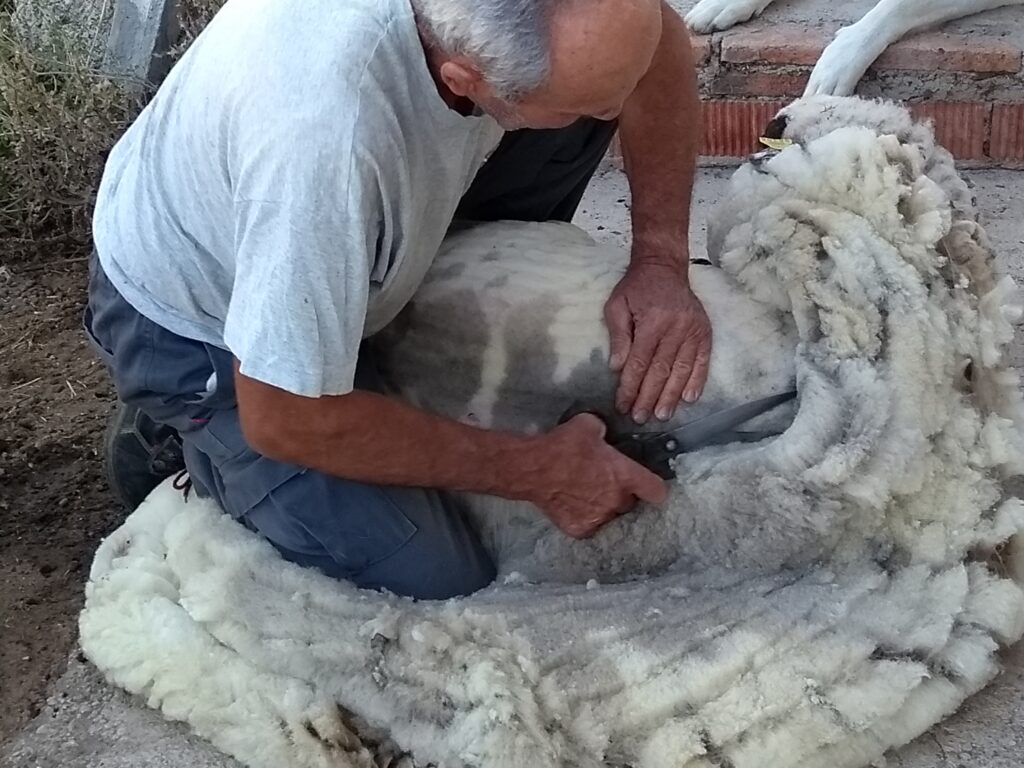
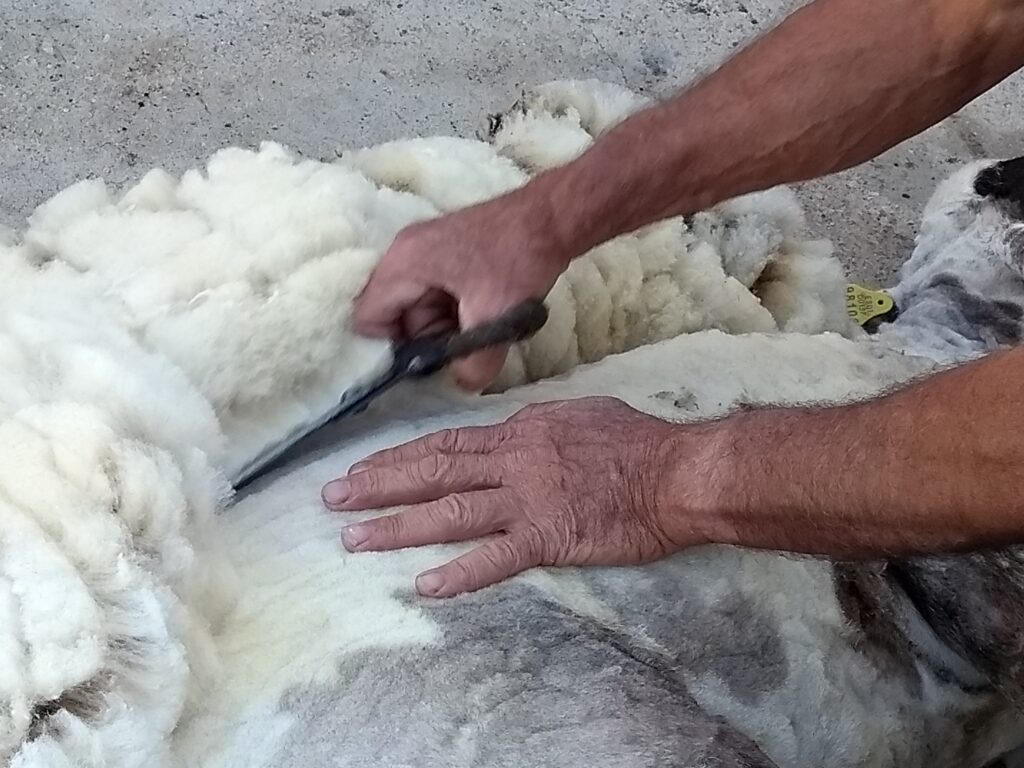
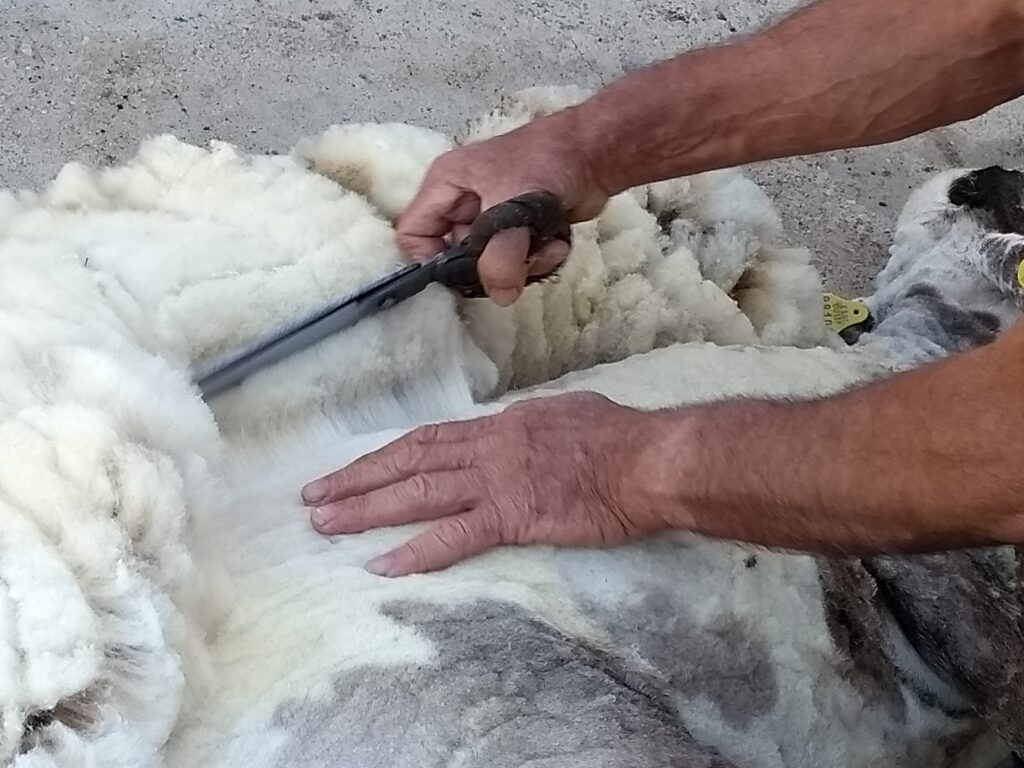
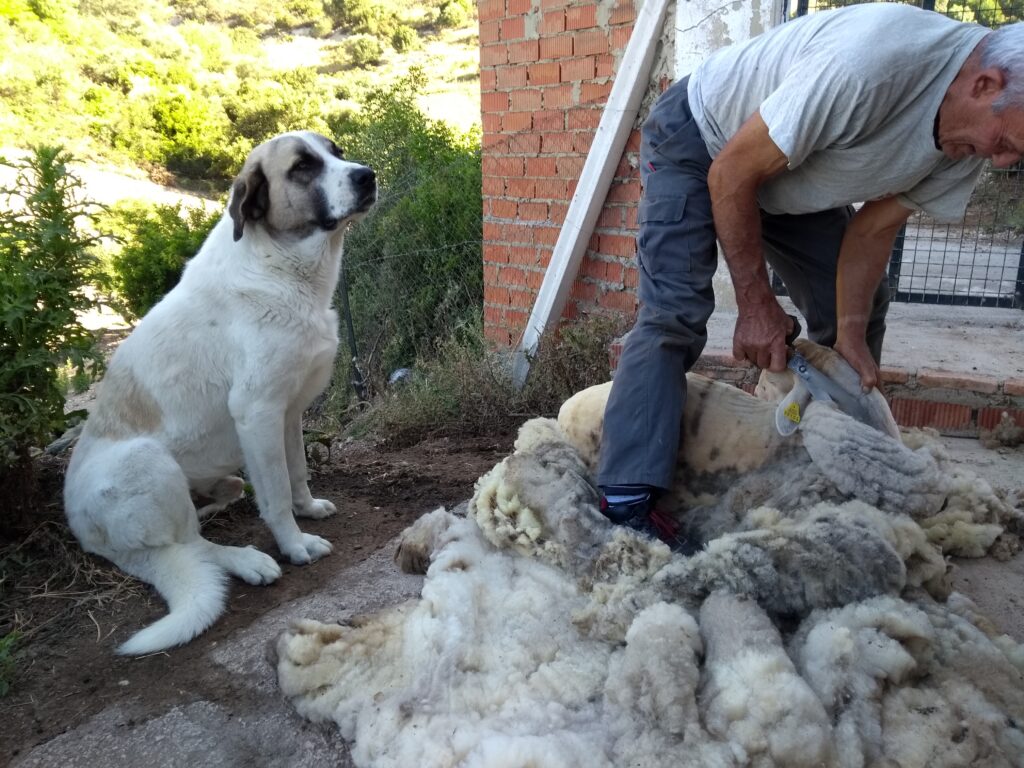
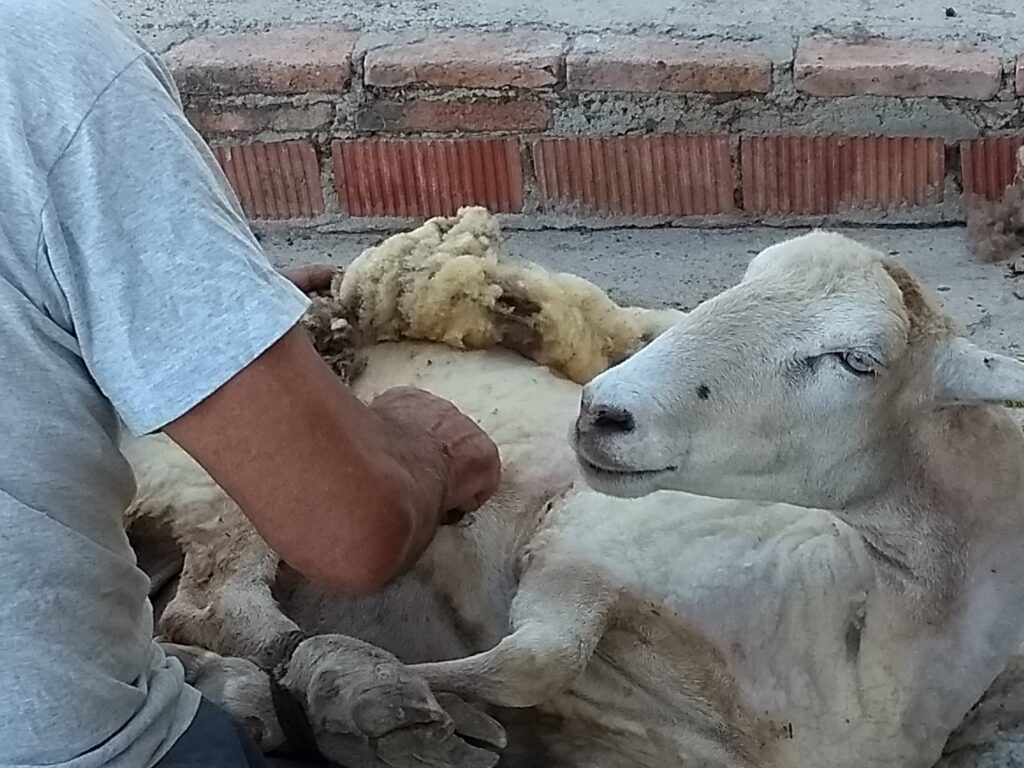
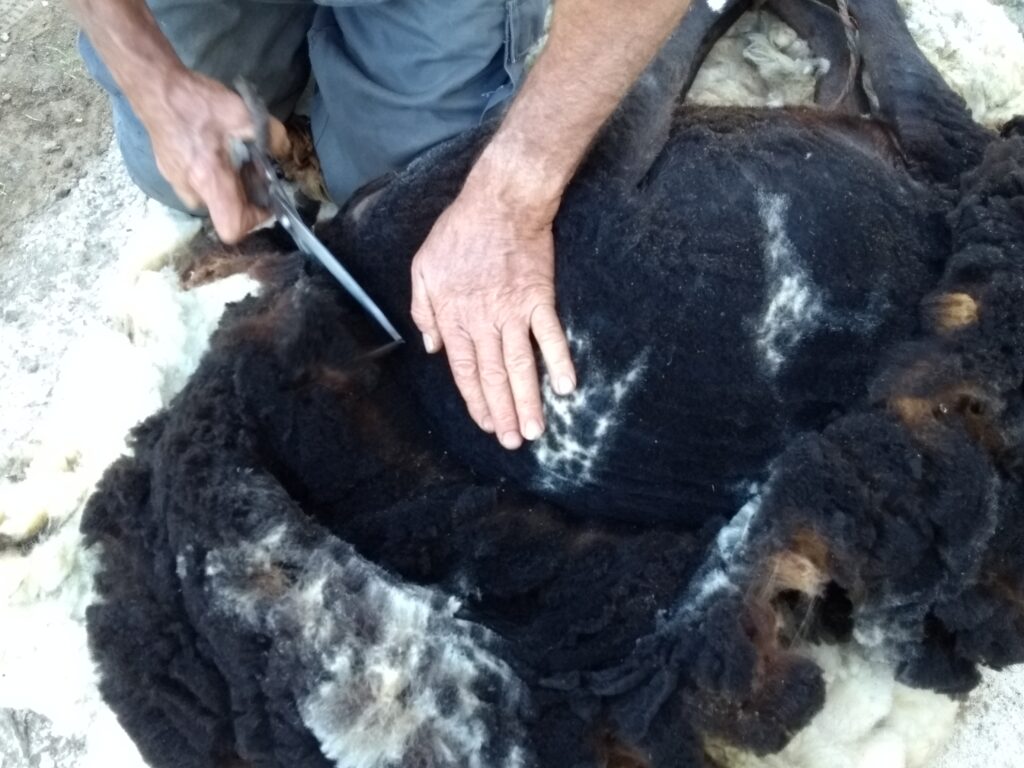
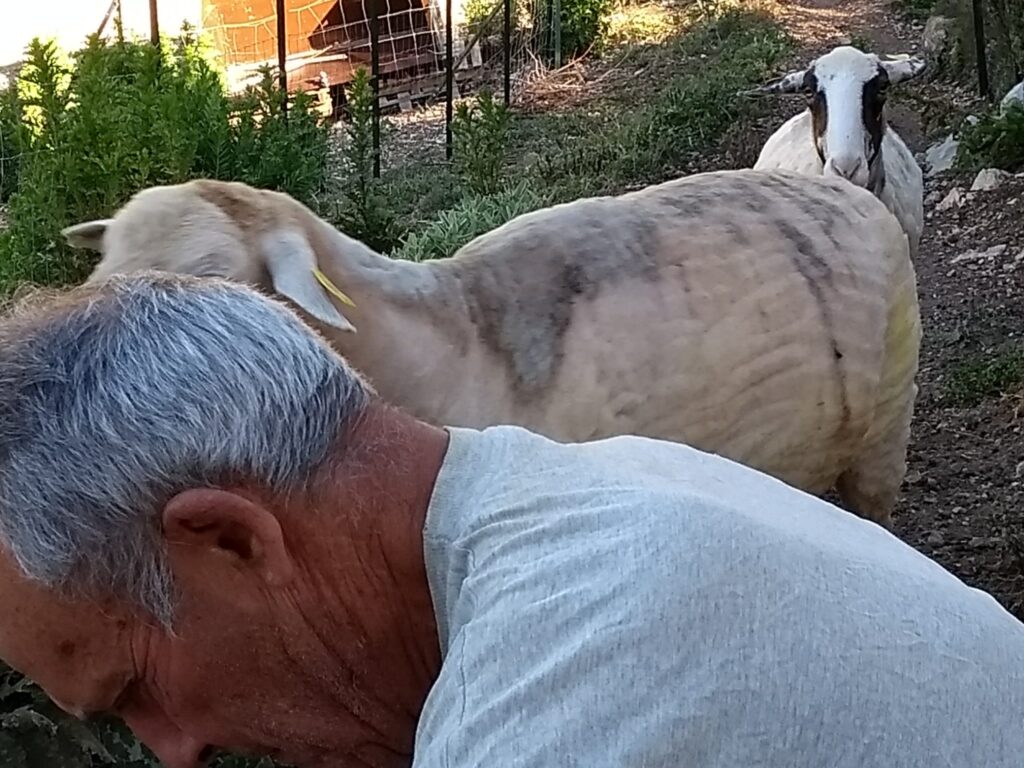
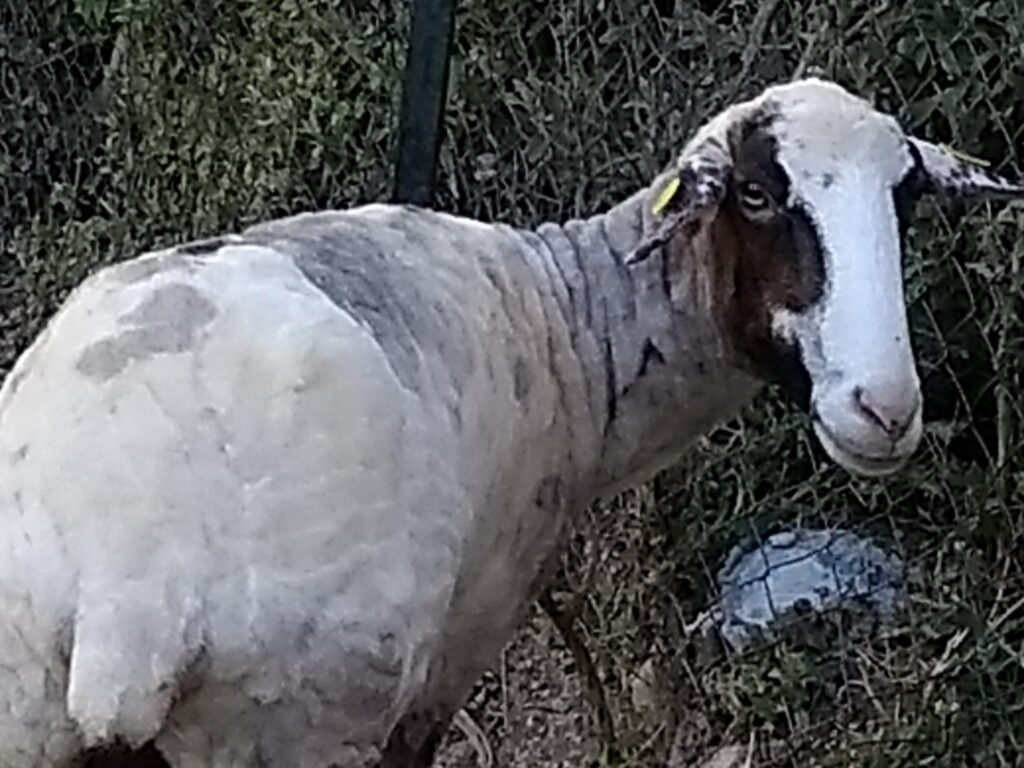
Sheep shearer Manuel begins his work early in the morning, slowly and serenely, Something the sheep perceive, given that he’s been at this for years. Simply look at the photos to see how the sheep give themselves over to his ministrations while the mastiff curiously and calmly watches the silent labor.
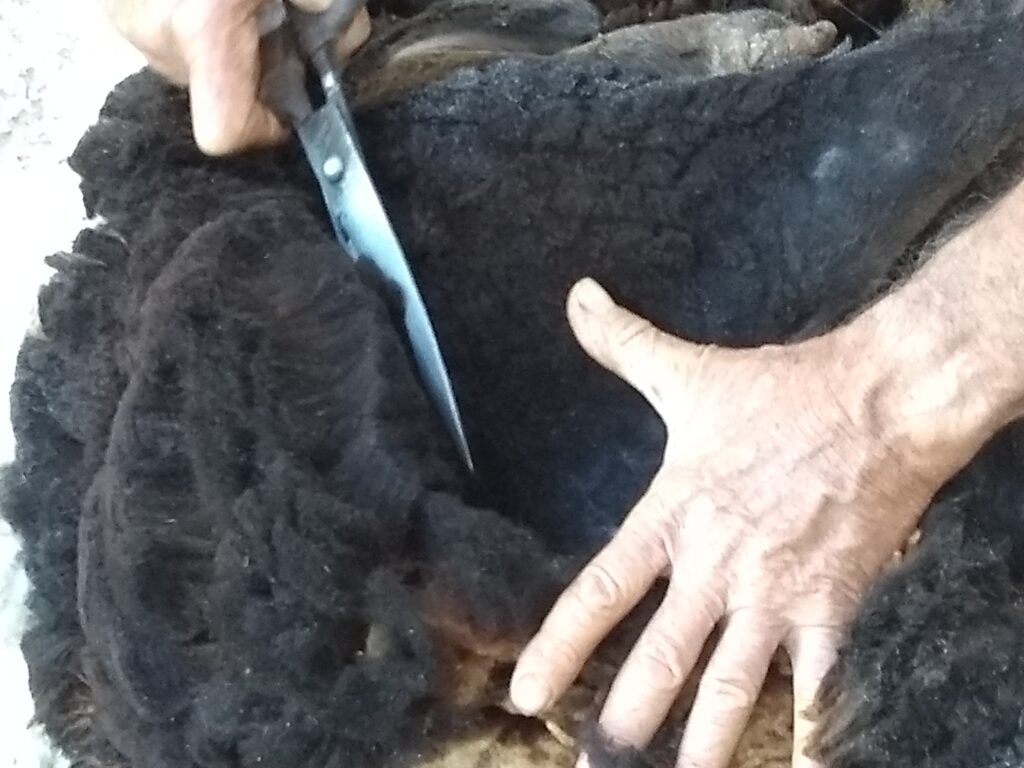
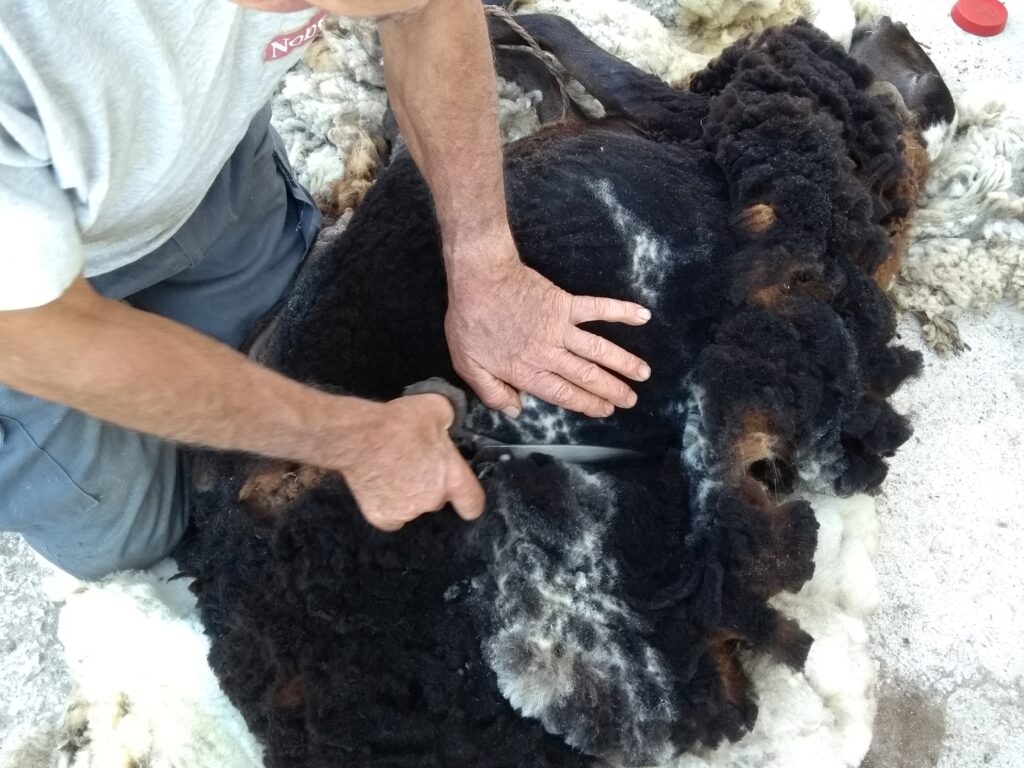
Once sheared,, the lamb rapidly leaves his hands only to grow curious, jumping to observe his companion in those same hands, soft but firm and certain hands masterfully employing huge, well-sharpened scissors. Once finished, he checks over each sheep in case there is a small scratch, in which case he applies a black ointment, likely a traditional remedy, made from ash, olive oil and Zotal, a totally curative mix for any scratch or wound.
Selecting the wool
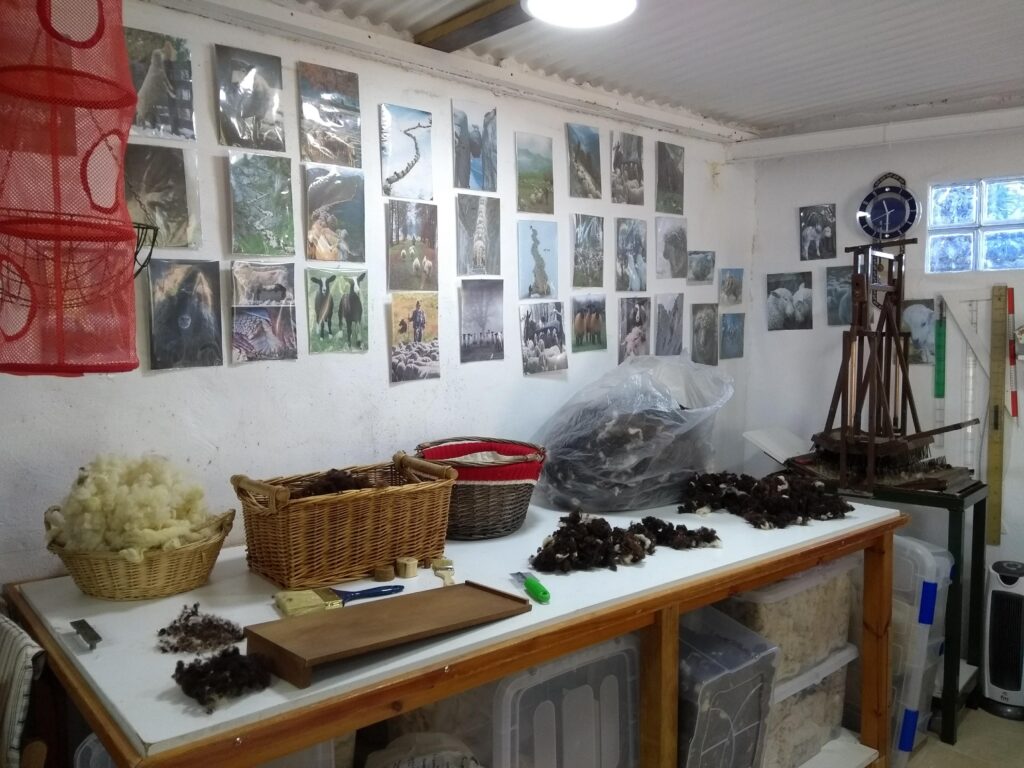
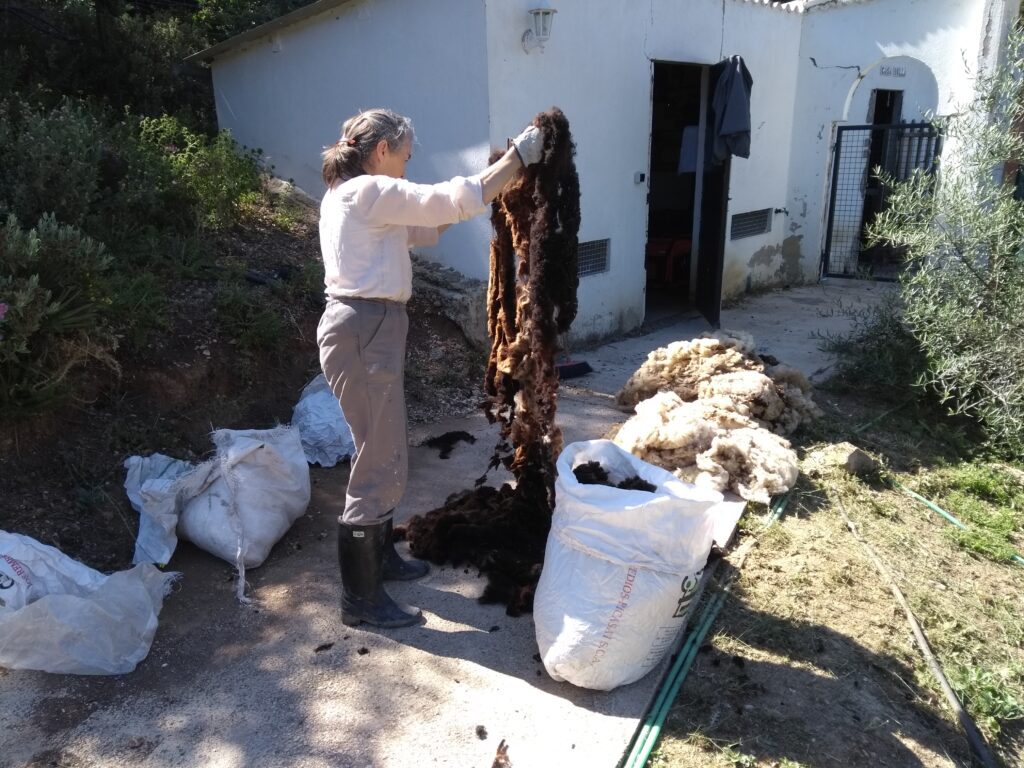
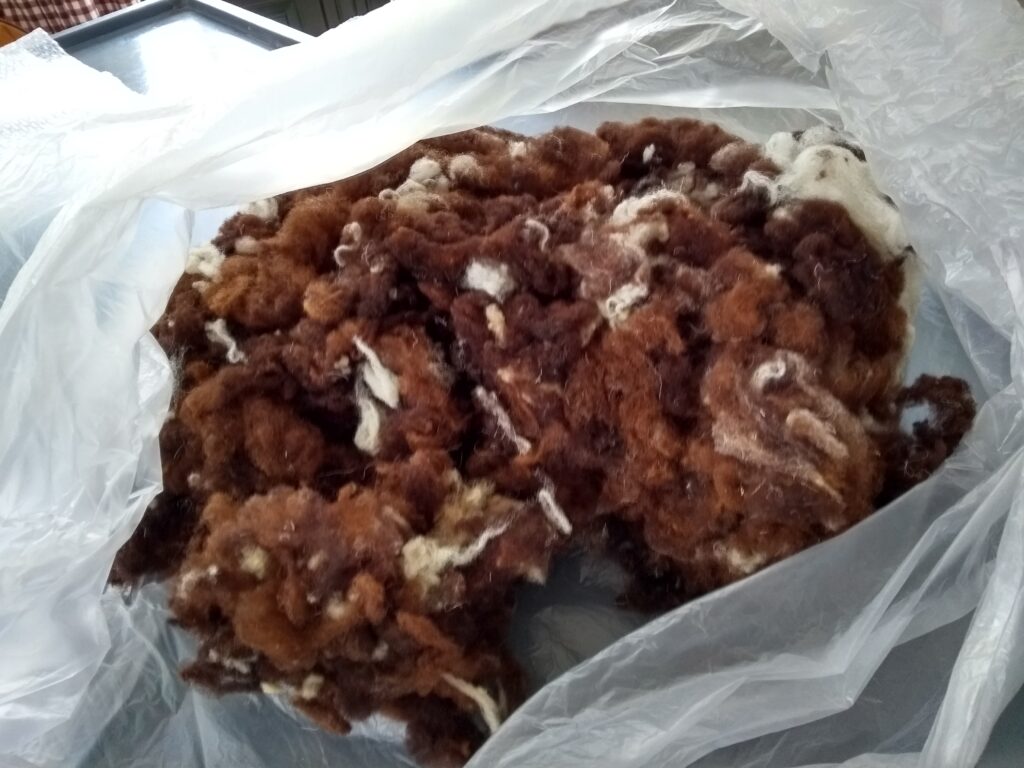
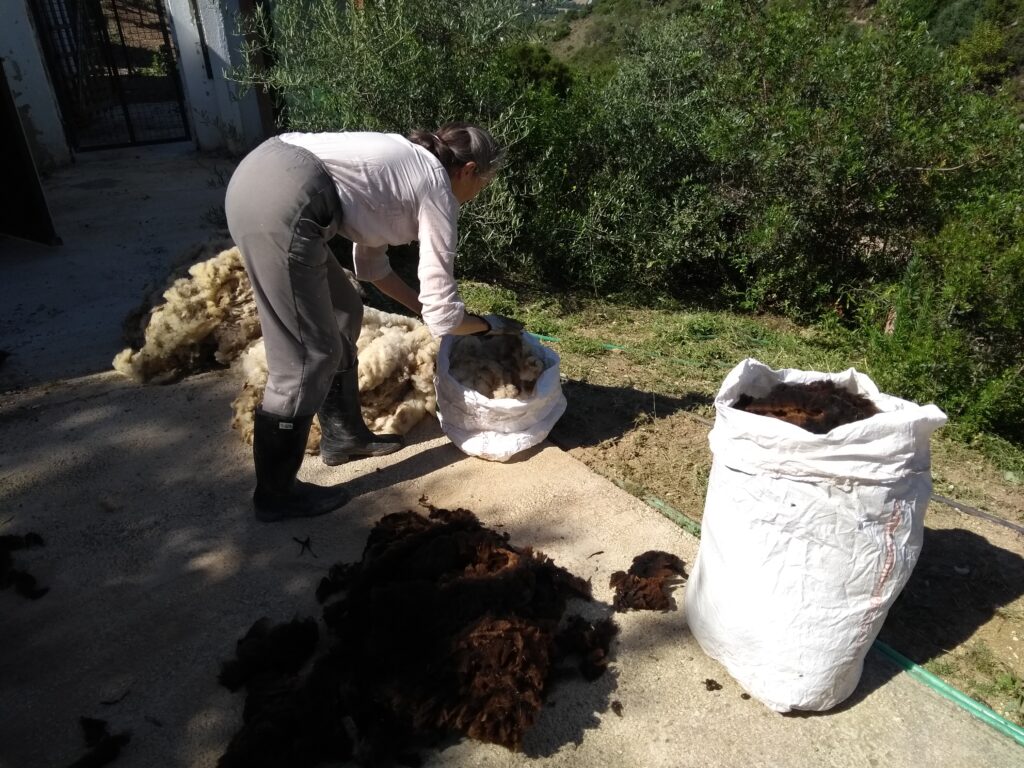
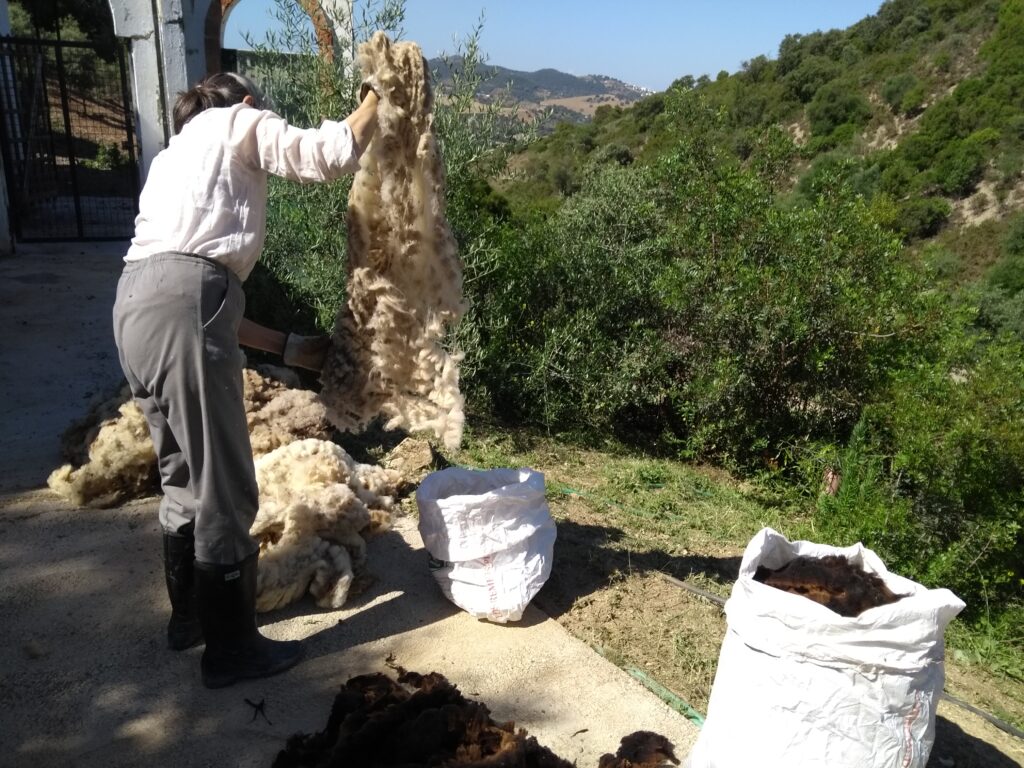
It’s surprising that when one takes the bits of wool in hand and senses the elesticity if the wool once detahced from the flesh. One then places it upon a slab of cement in the shape of a bear skin. There one sees to what extent the extremities have been fouled by urine and/or feces, the discards them, leaving only those parts that are completely clean. From five sheep, one obtains approximately four sacks of usable wool. Each sheep, according to breed and hair length , yields between two to two and ha half kilos (four and a half to five and a half pounds).
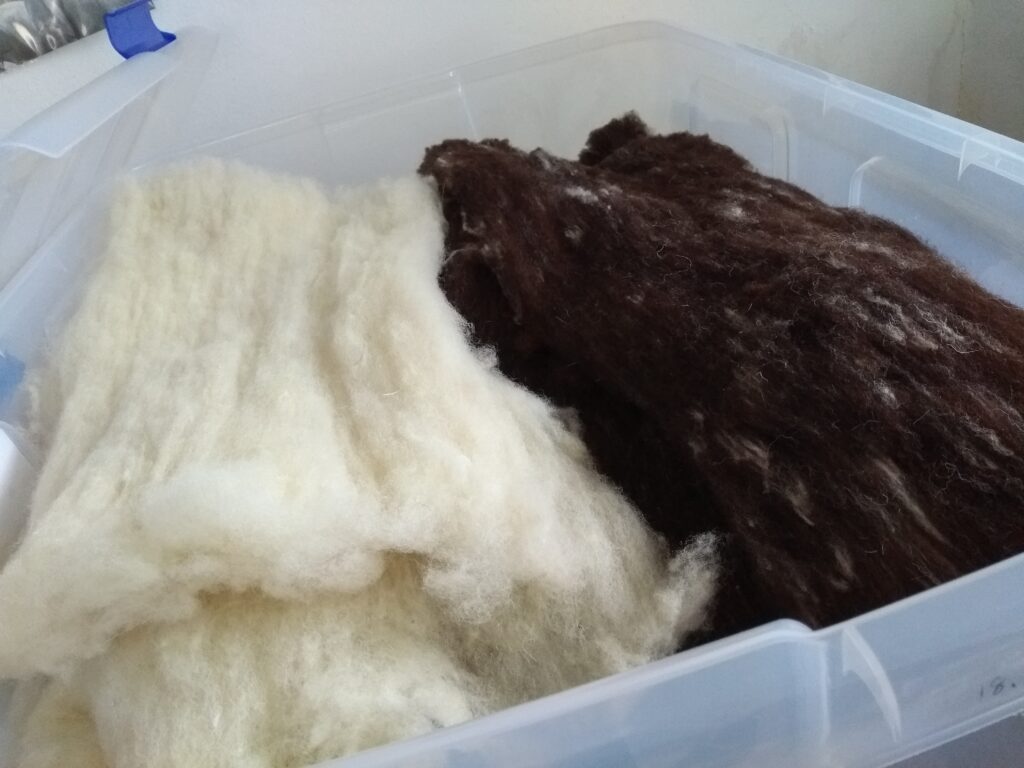
To a considerably lesser extent, the washed wool still contains organic wastes and tangles formed of parts overexposed to the sun. The wool is dried during the motorized carding process, which leaves short-haired discards (well suited for manual labors with wool such as the creating of artisanal animals and decorative accessories) leaving only long fibers of combed wool. This gives us a good idea of the the finalized quantity of “real wool” beginning with its selection having passed thorugh dry washing and carding as well as the time necessary to obtain it.
Washing, Drying and Storage
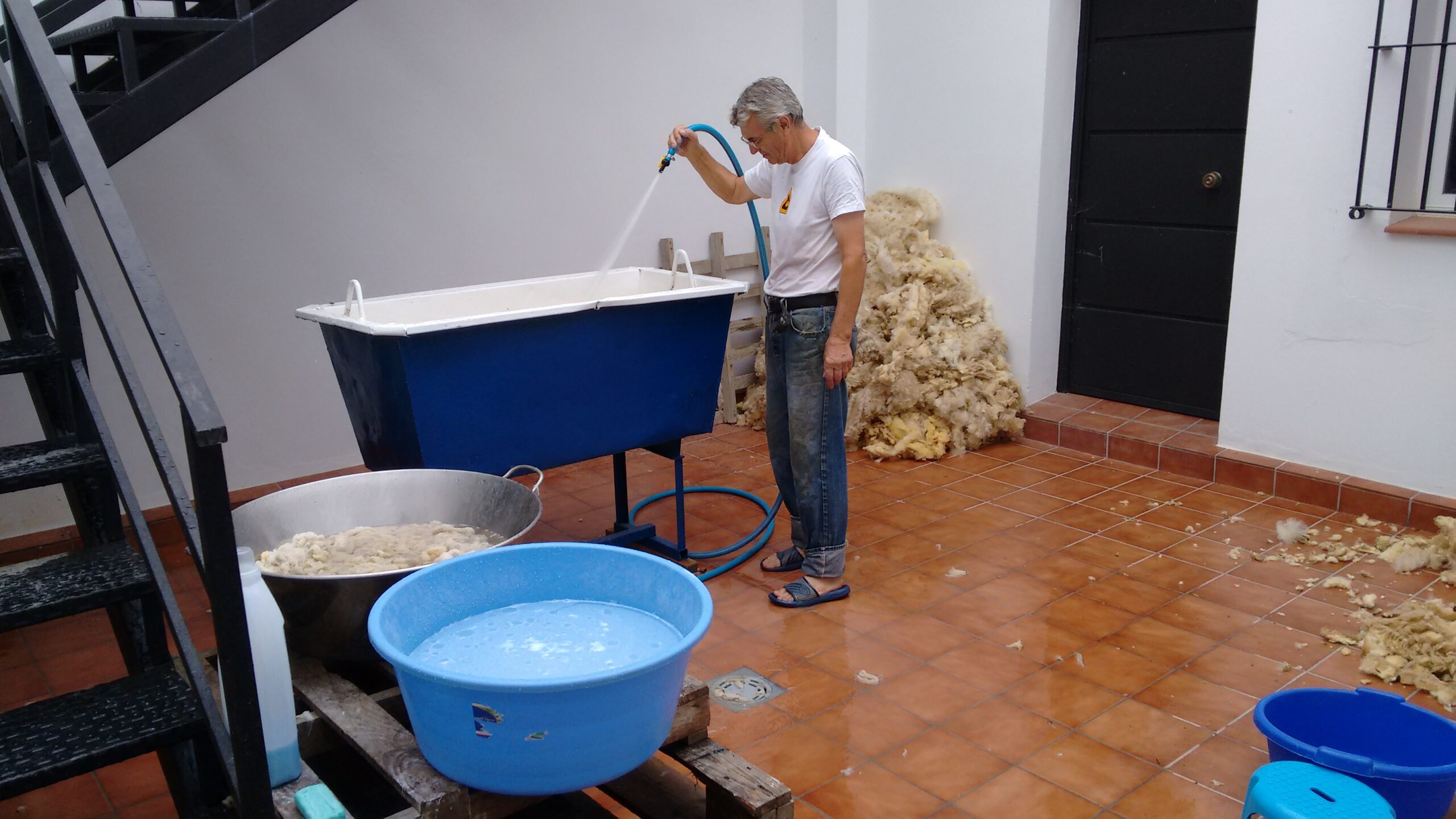
1st: Washing in a pressure washer
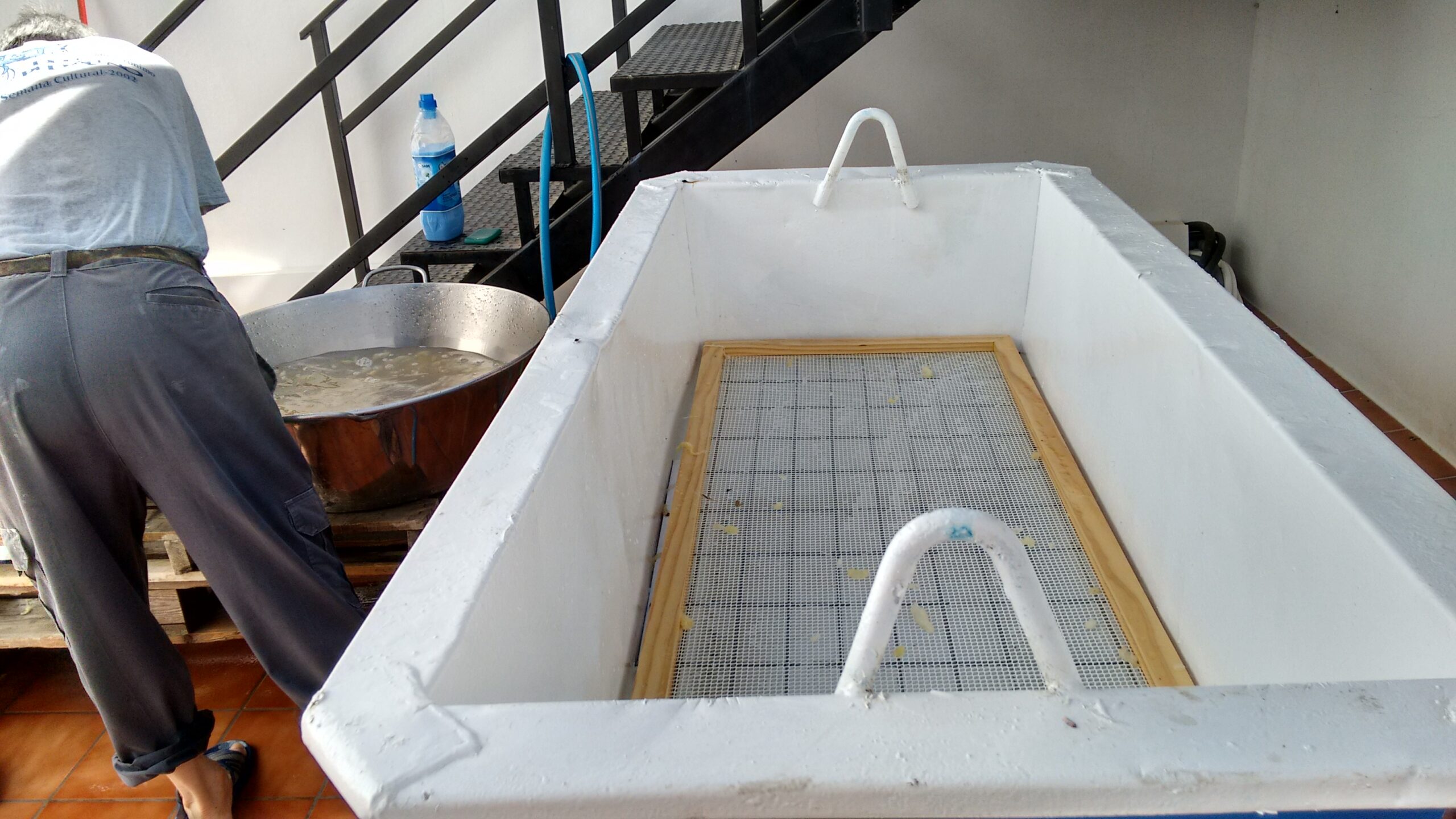
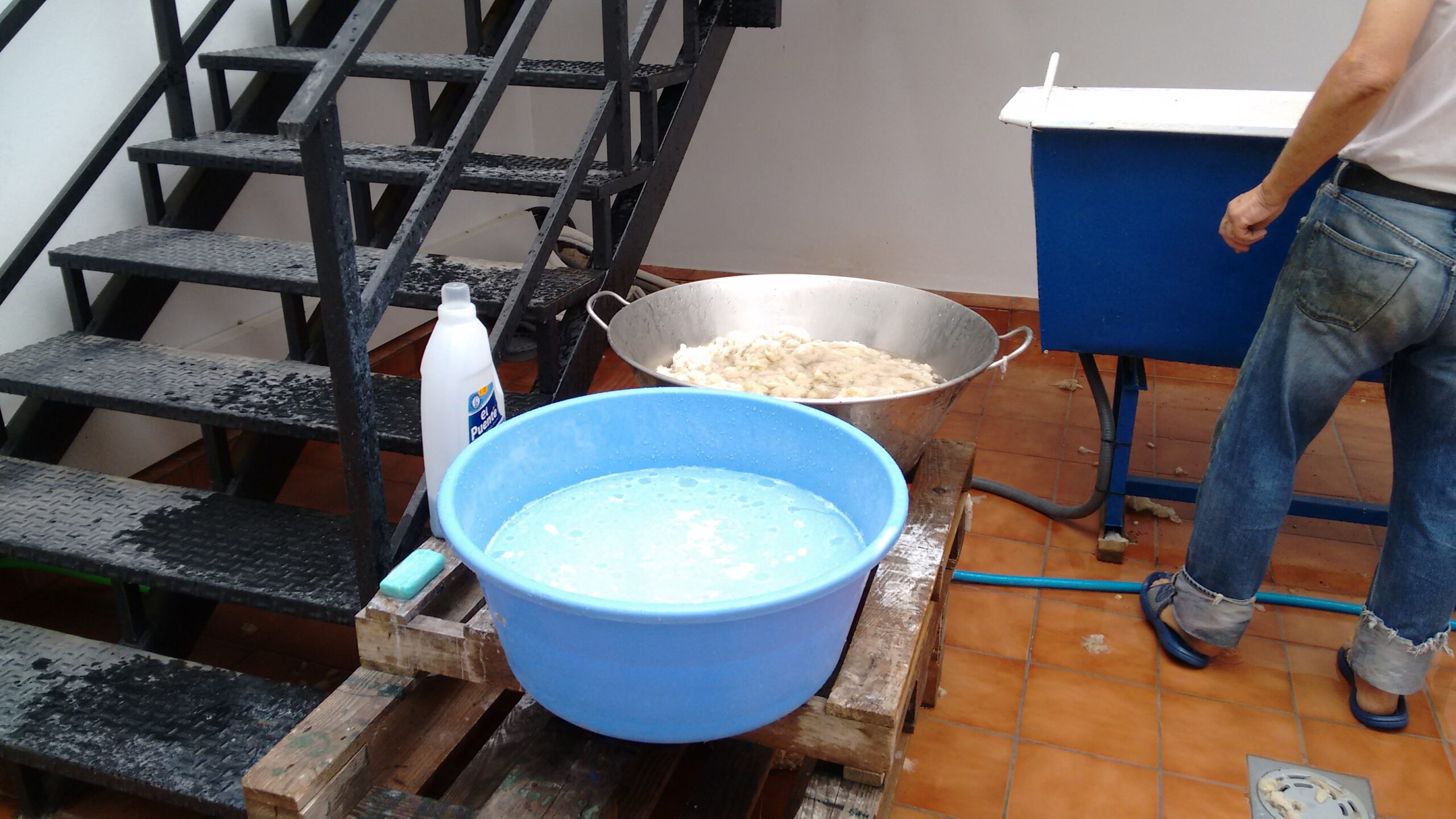
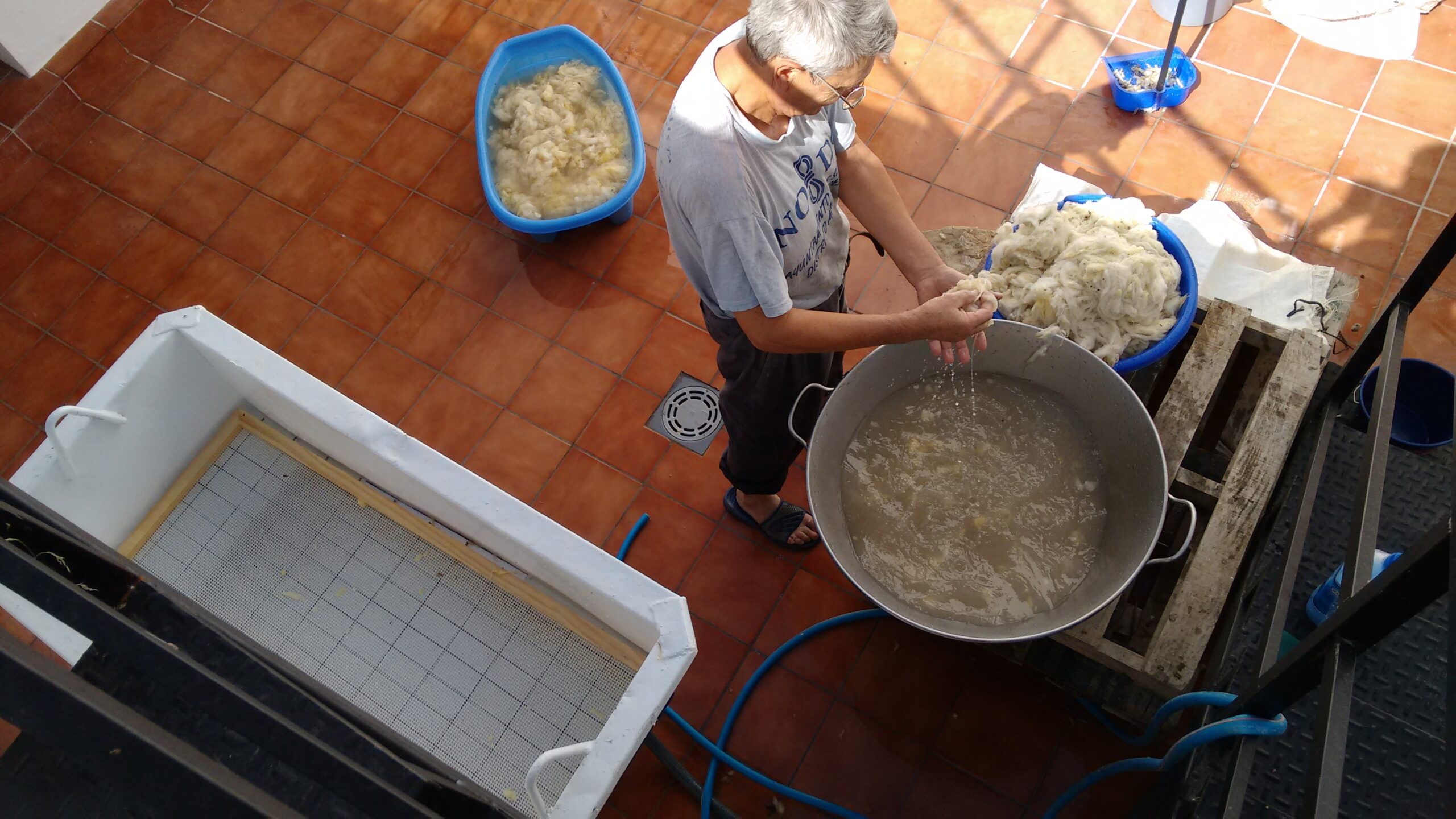
Pressure washing is carried out in a “tub” made for the purpose. It consists of a drain and a rack at mid-level upon which the wool is hung at half-depth. Then, applying water at high pressure, remaining wastes are cleansed.Once the water drains clear, the wool is ready for further cleaning.
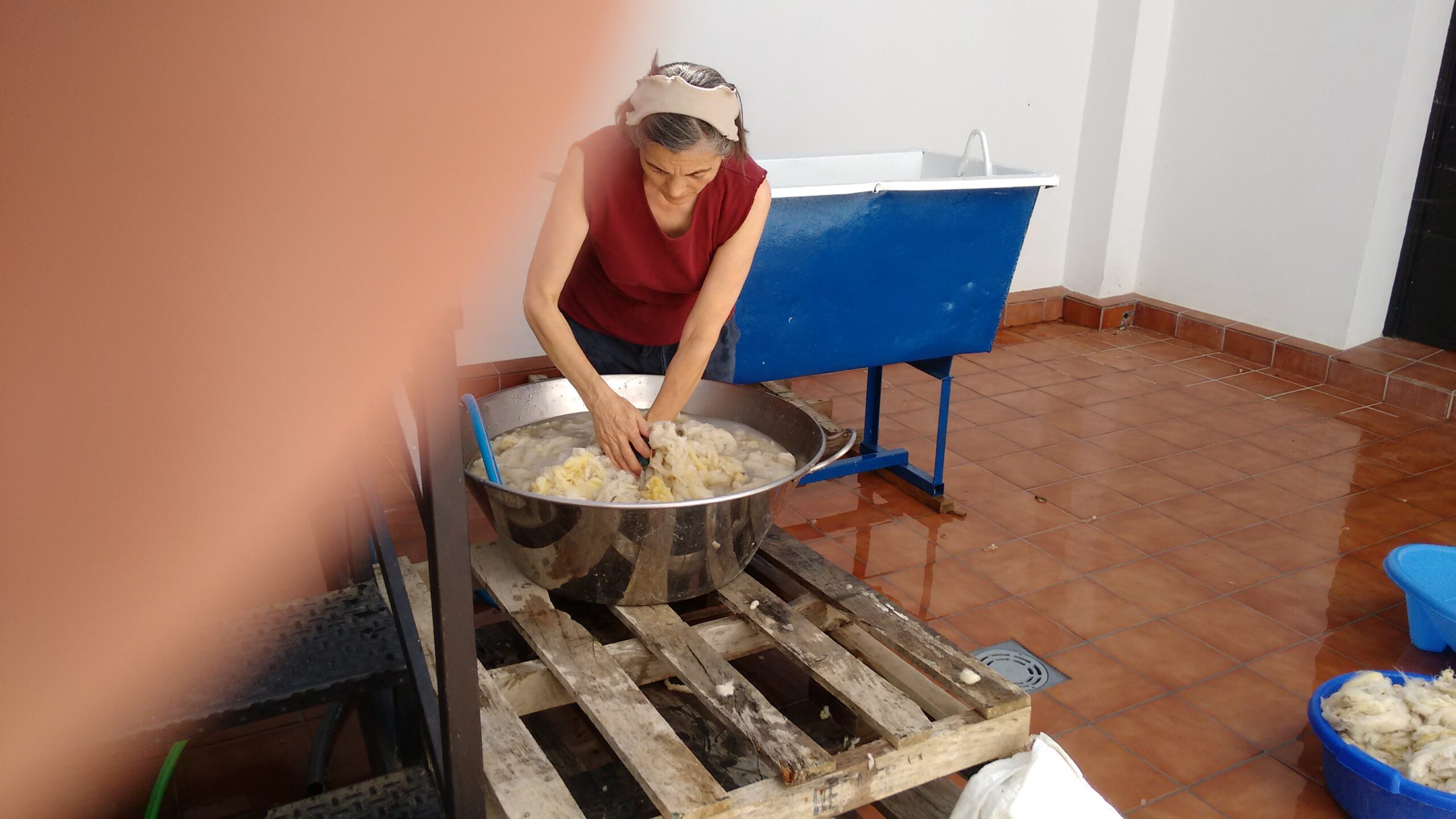
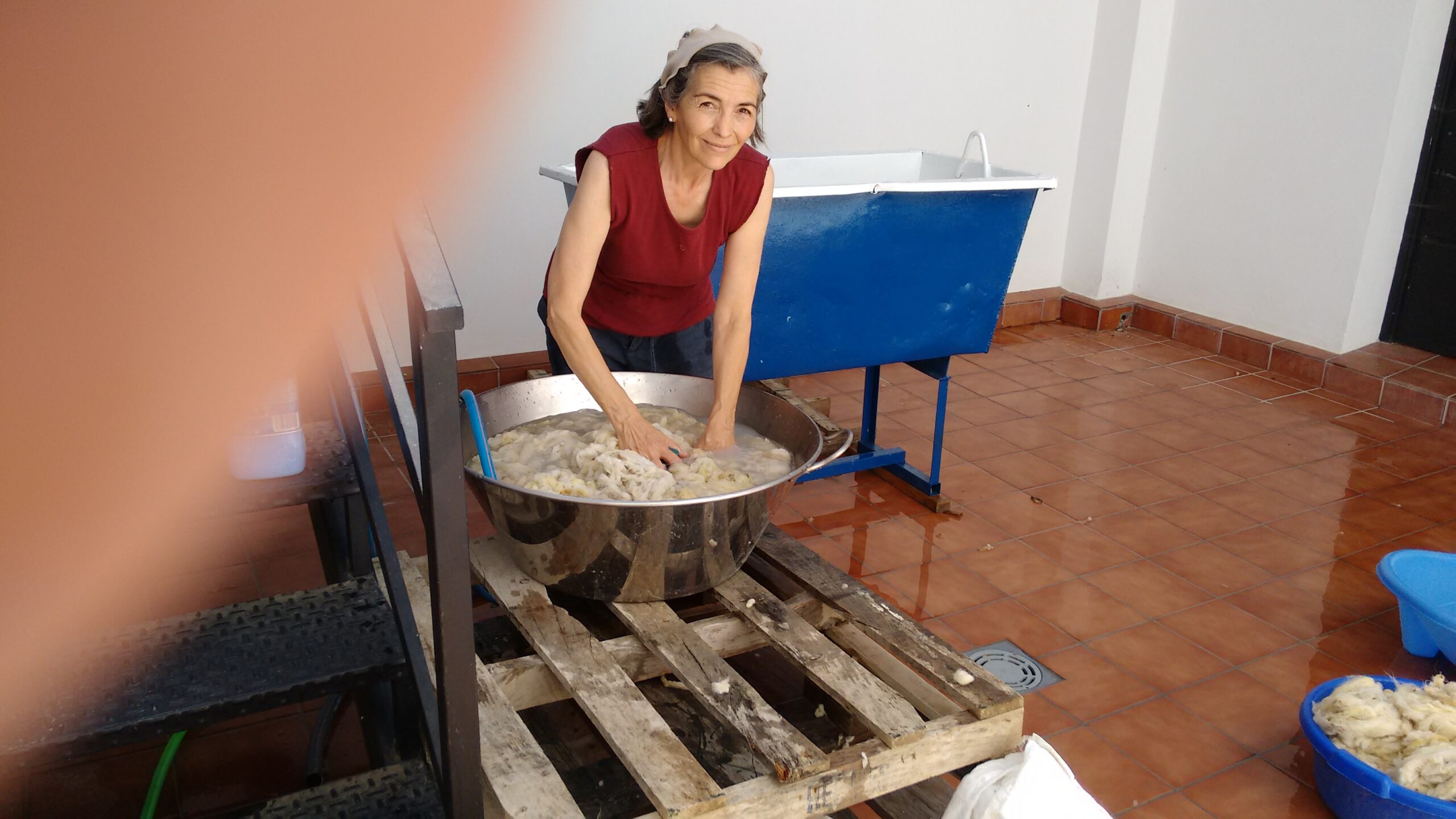
2nd: Soaping
We use natural soap, moving the wool in its bath until the wool is impregnated with soap, then rinsed until ready for drainage.
3rd: Drainage
A small amount of drainage is all that is needed, given the use of natural soap. The wool is then wrung out and is ready for the apllication of fabric softener.
4th: Softening
Given that wool has natural lanoline, fine-smelling, softening is unnecessary.
5th: Hanging the wool
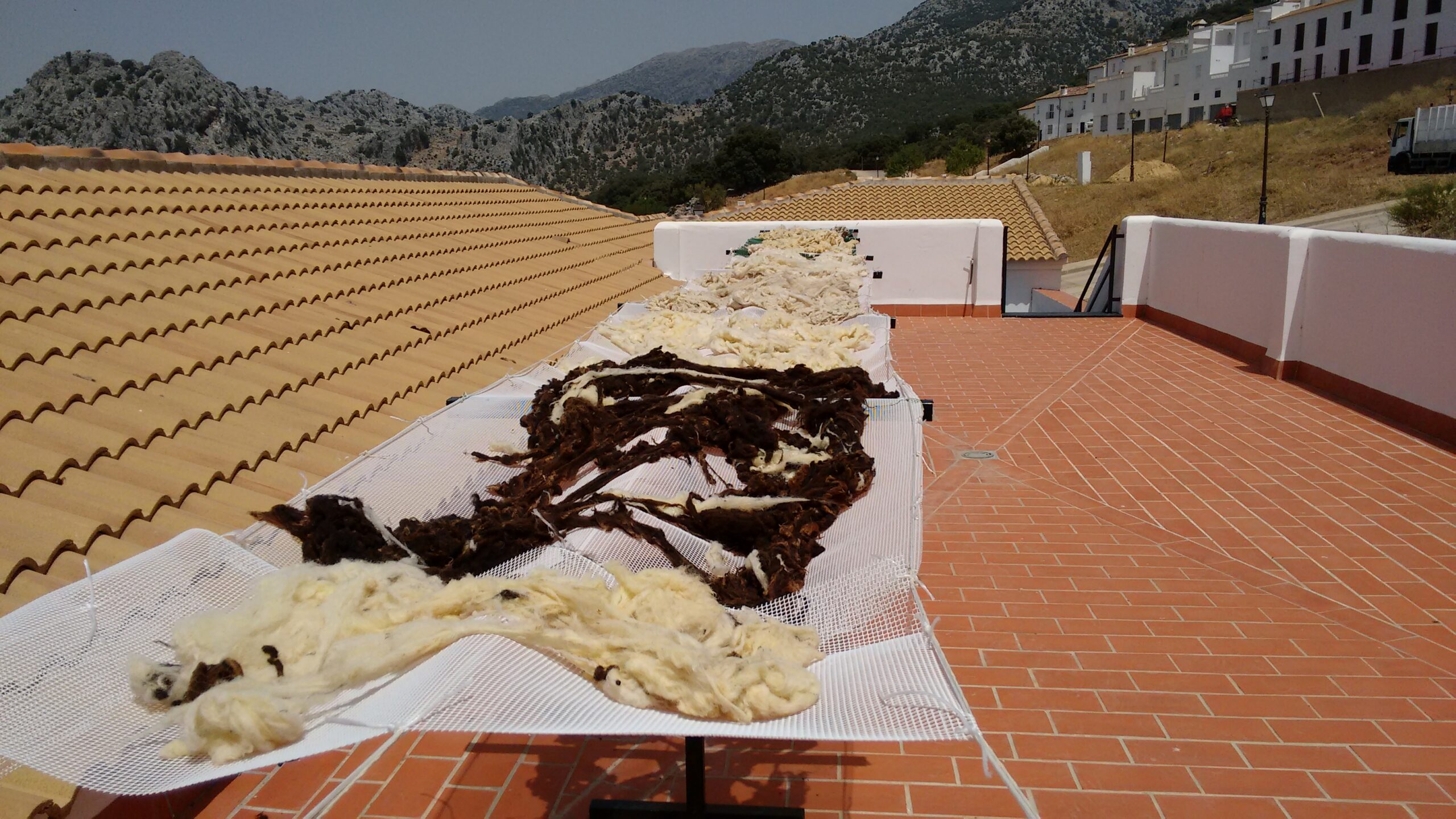
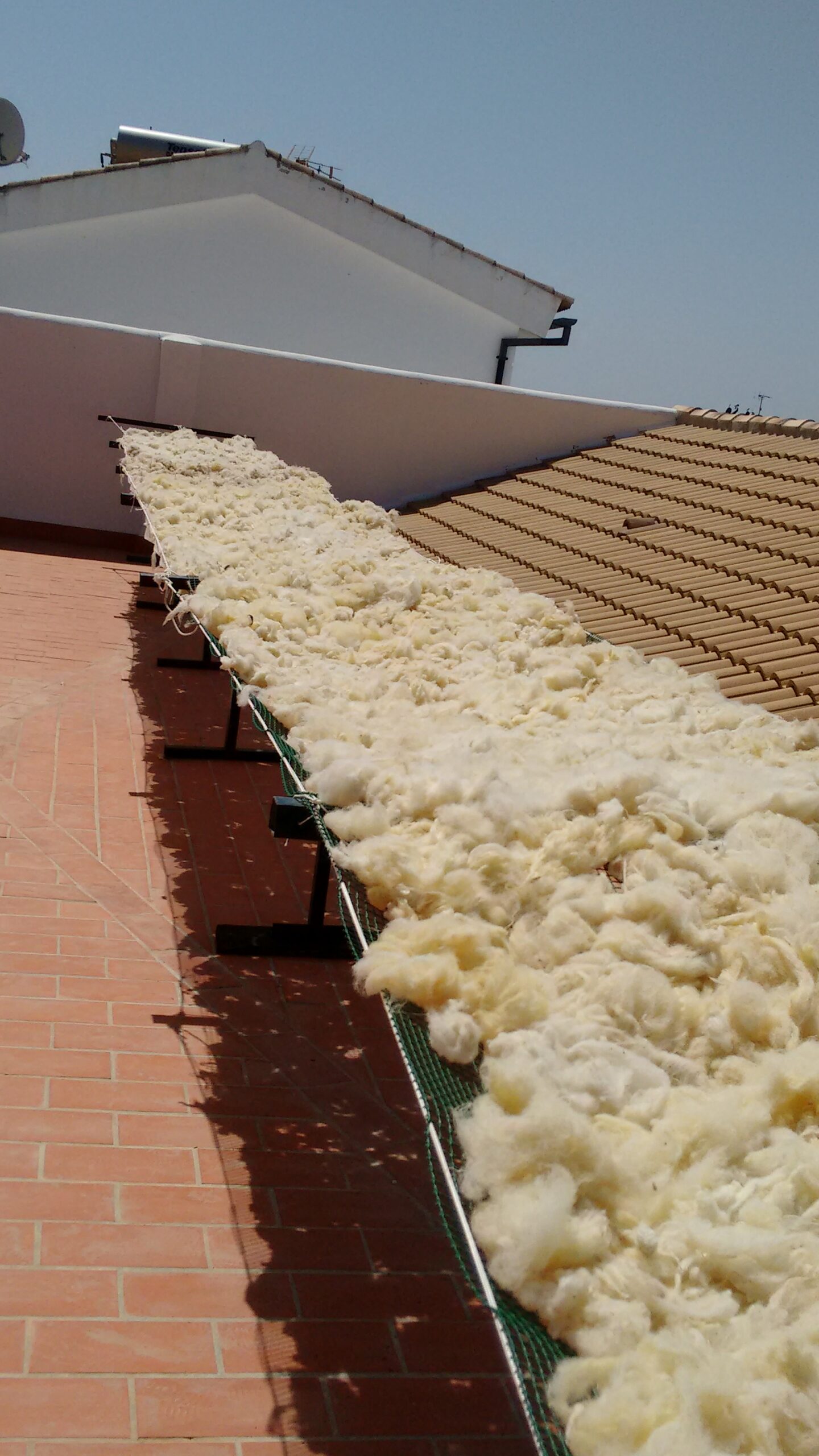
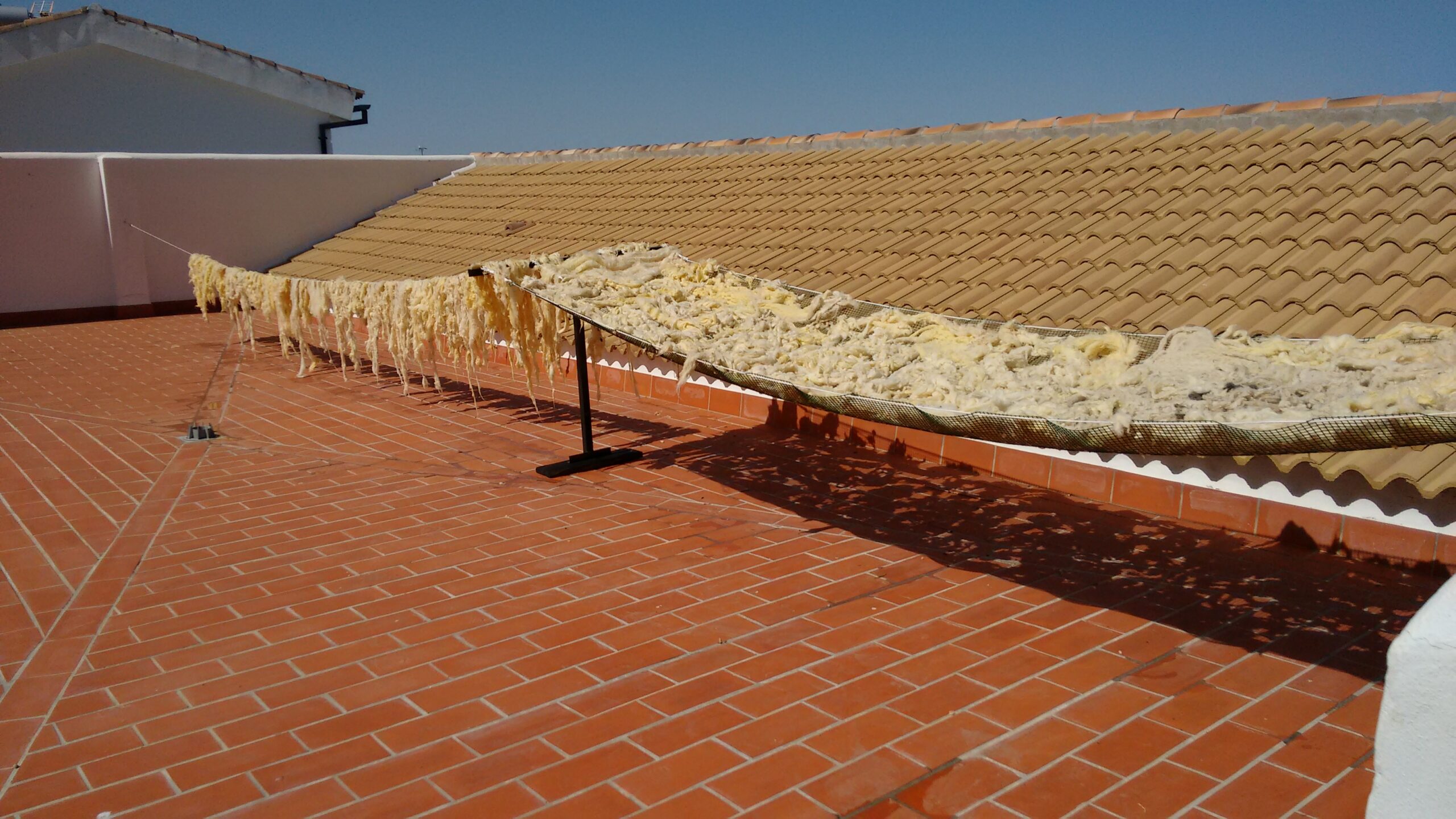
Once the washing and draining process is complete, the wool is hung to dry during June, July and August (in the northern hemisphere), beginning in the morning to be collected in thge afternoos prior to sunset so that sufficient time has passed for drying. During this time, the wool will bleach further.
6th: Storage of dried wool.
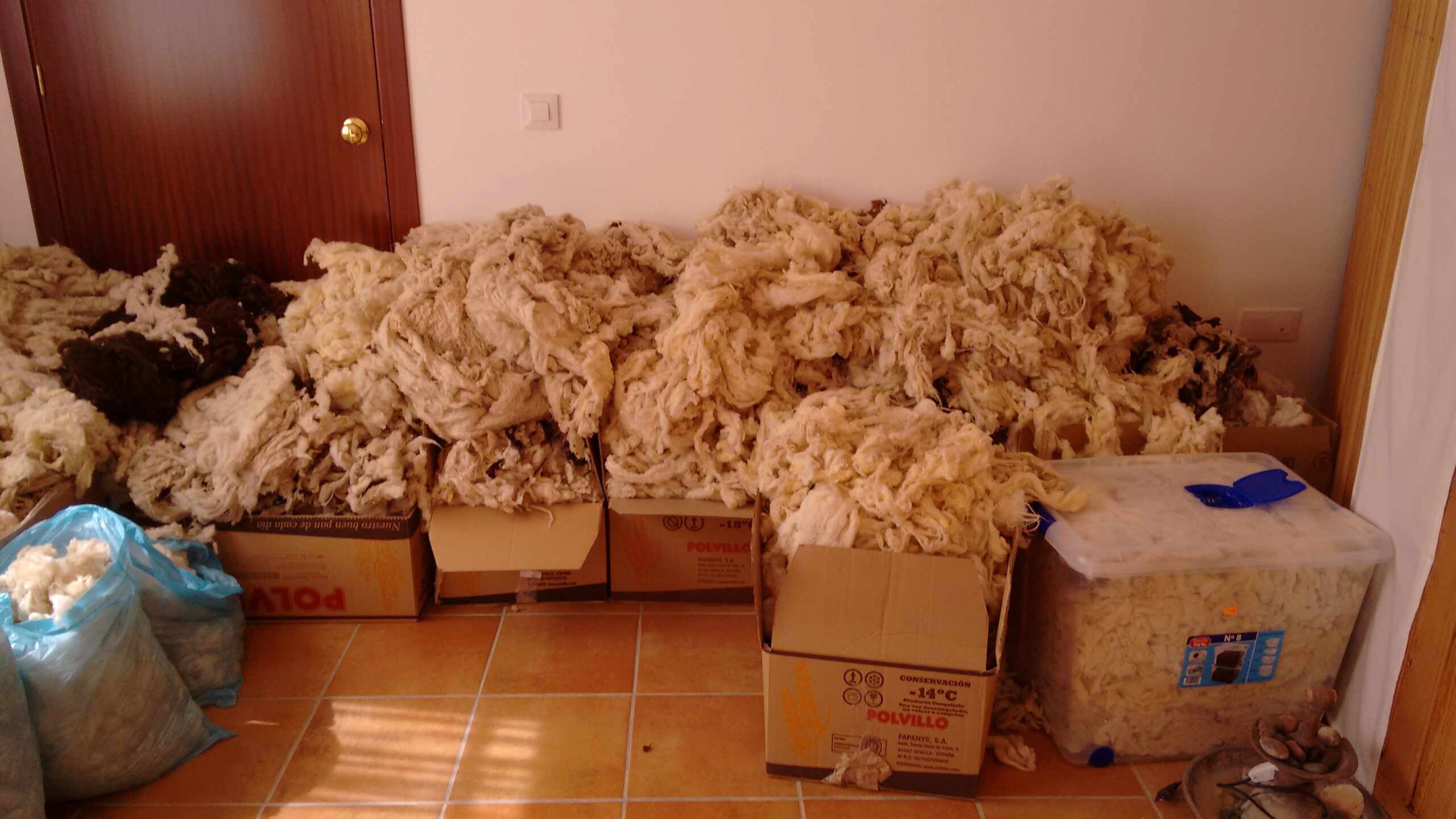
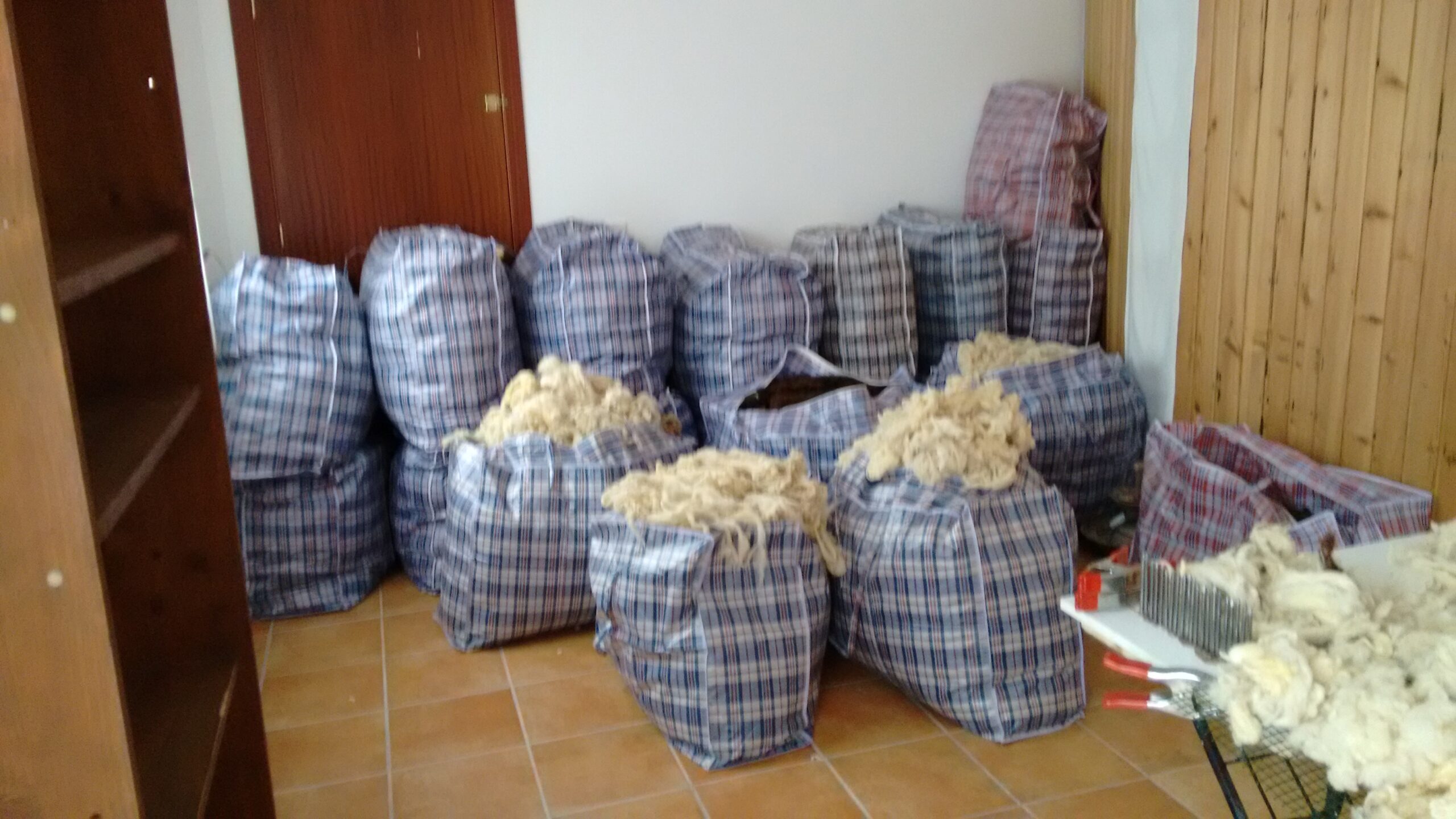
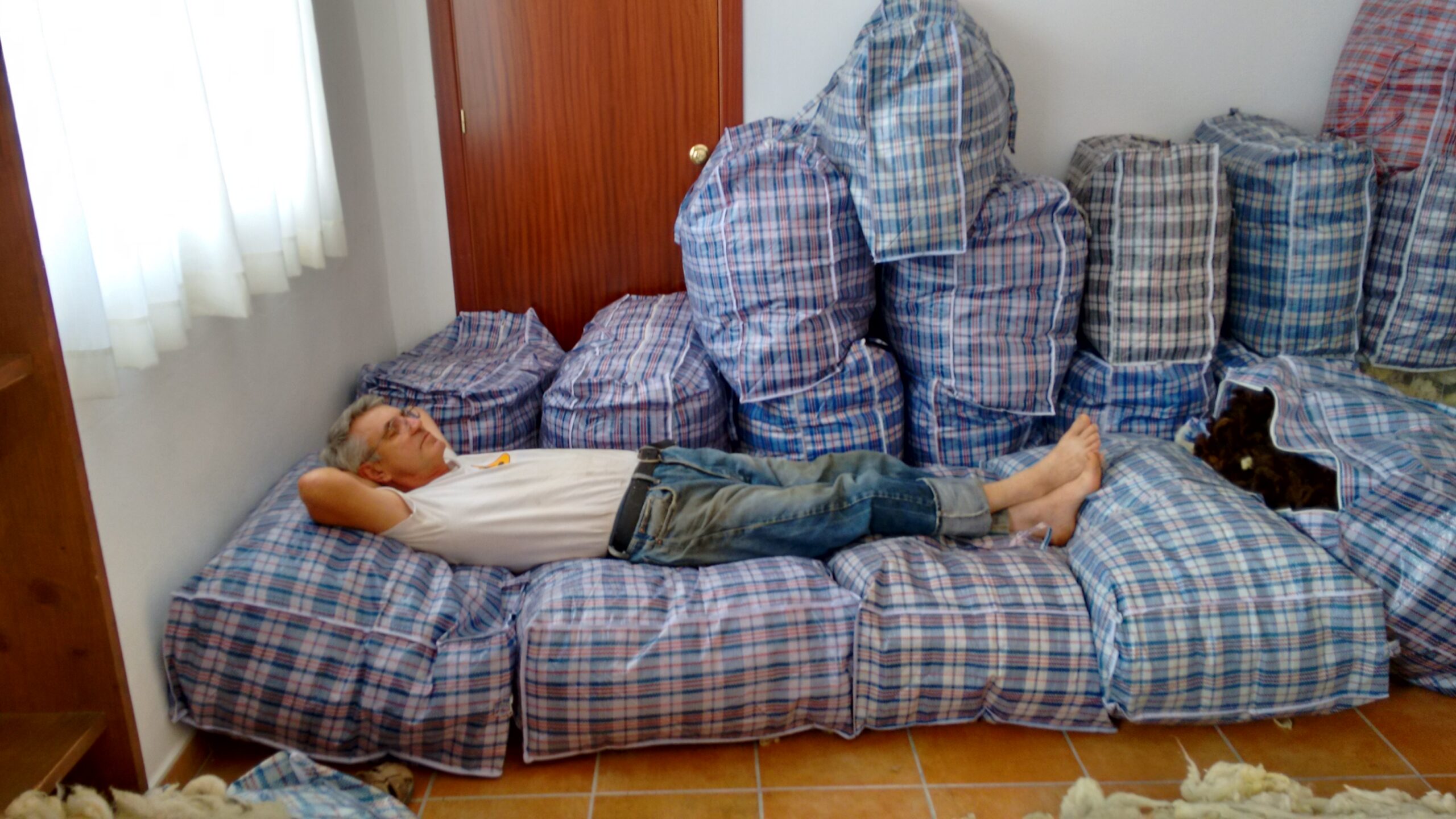
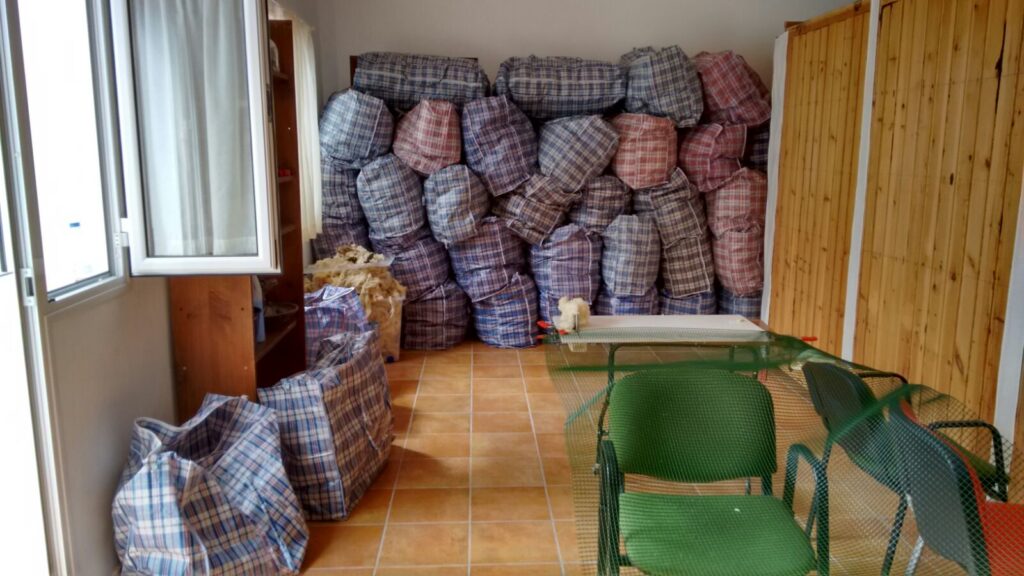
The wool is checked once more to assure that it is not still damp. Once completely dry, it is placed in bags with laurel leves to protect it from insects, after which it is stored until useage.

Details of the Workshop and Machinery
WORKSHOP SPACES
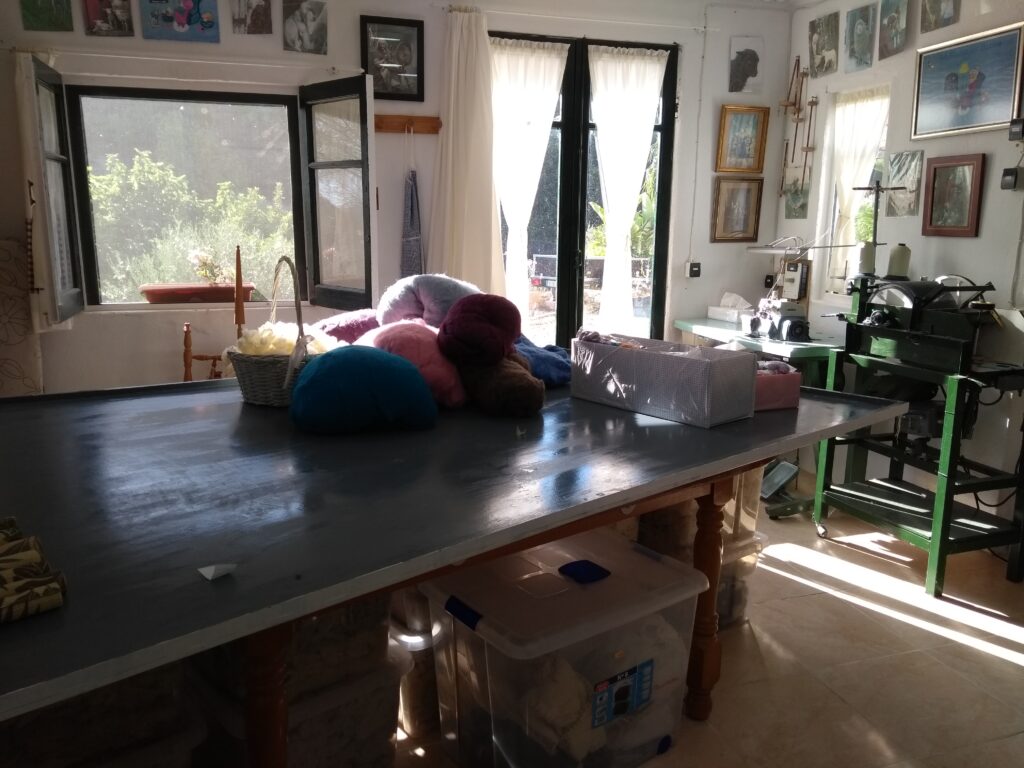
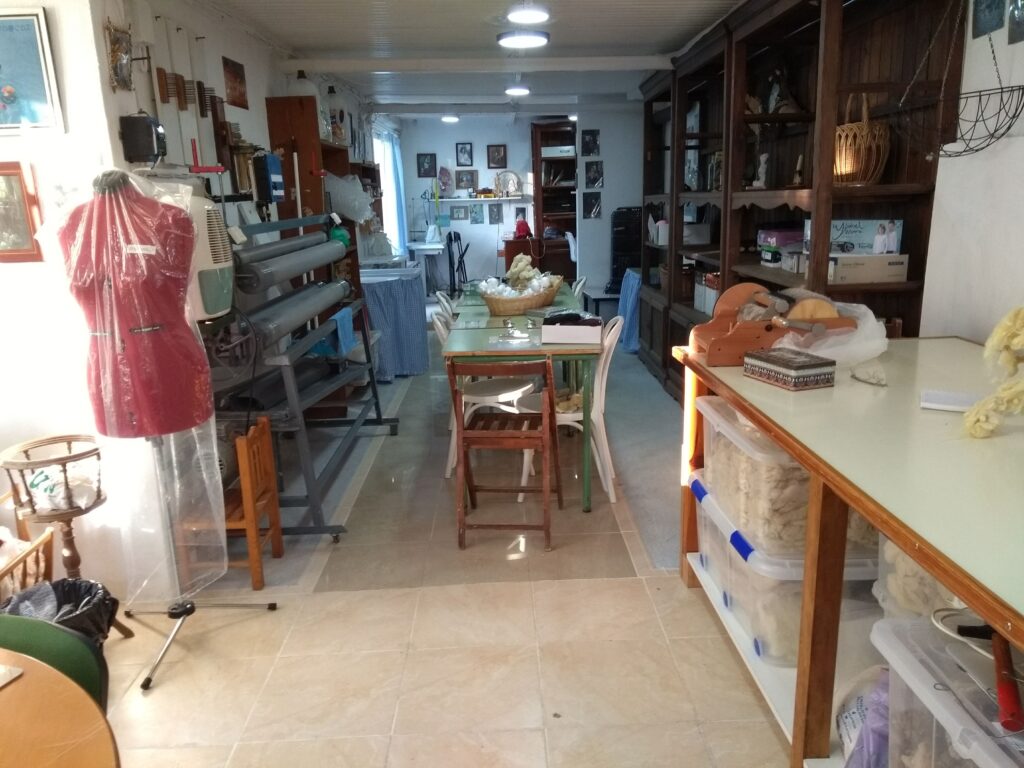
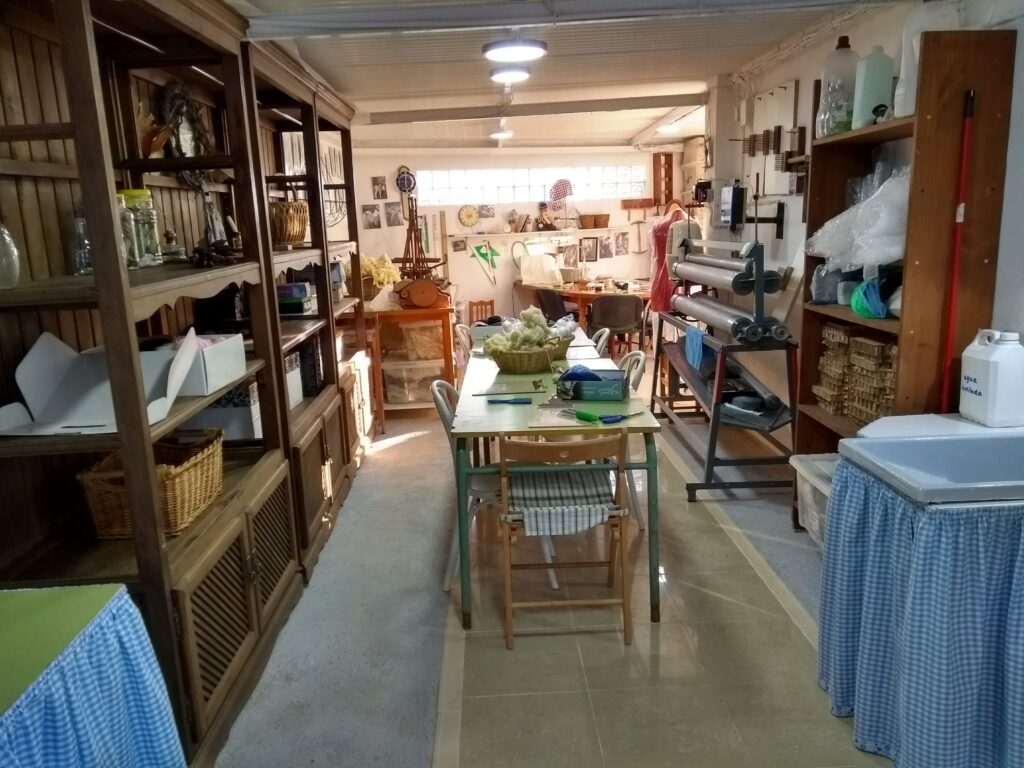
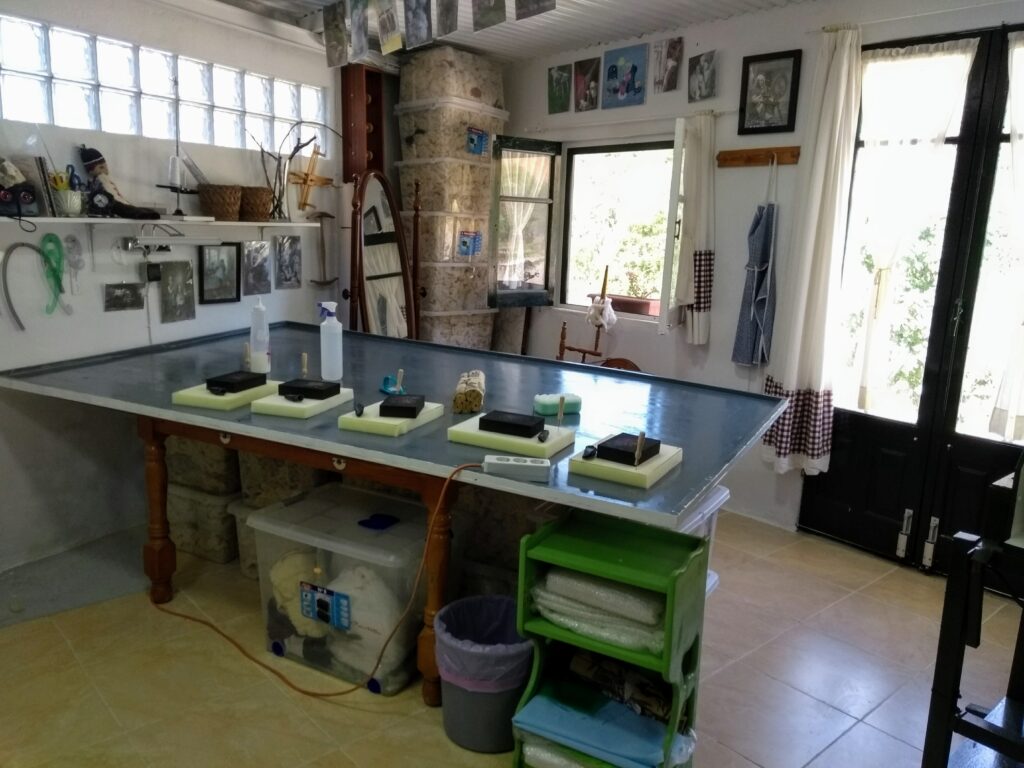
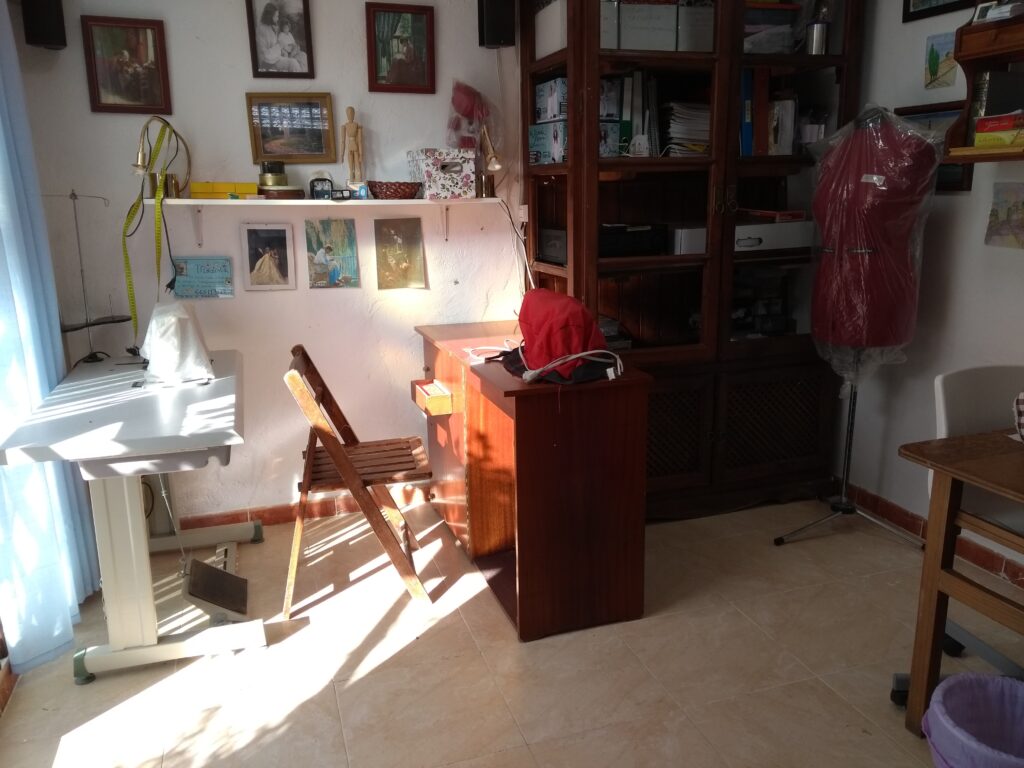
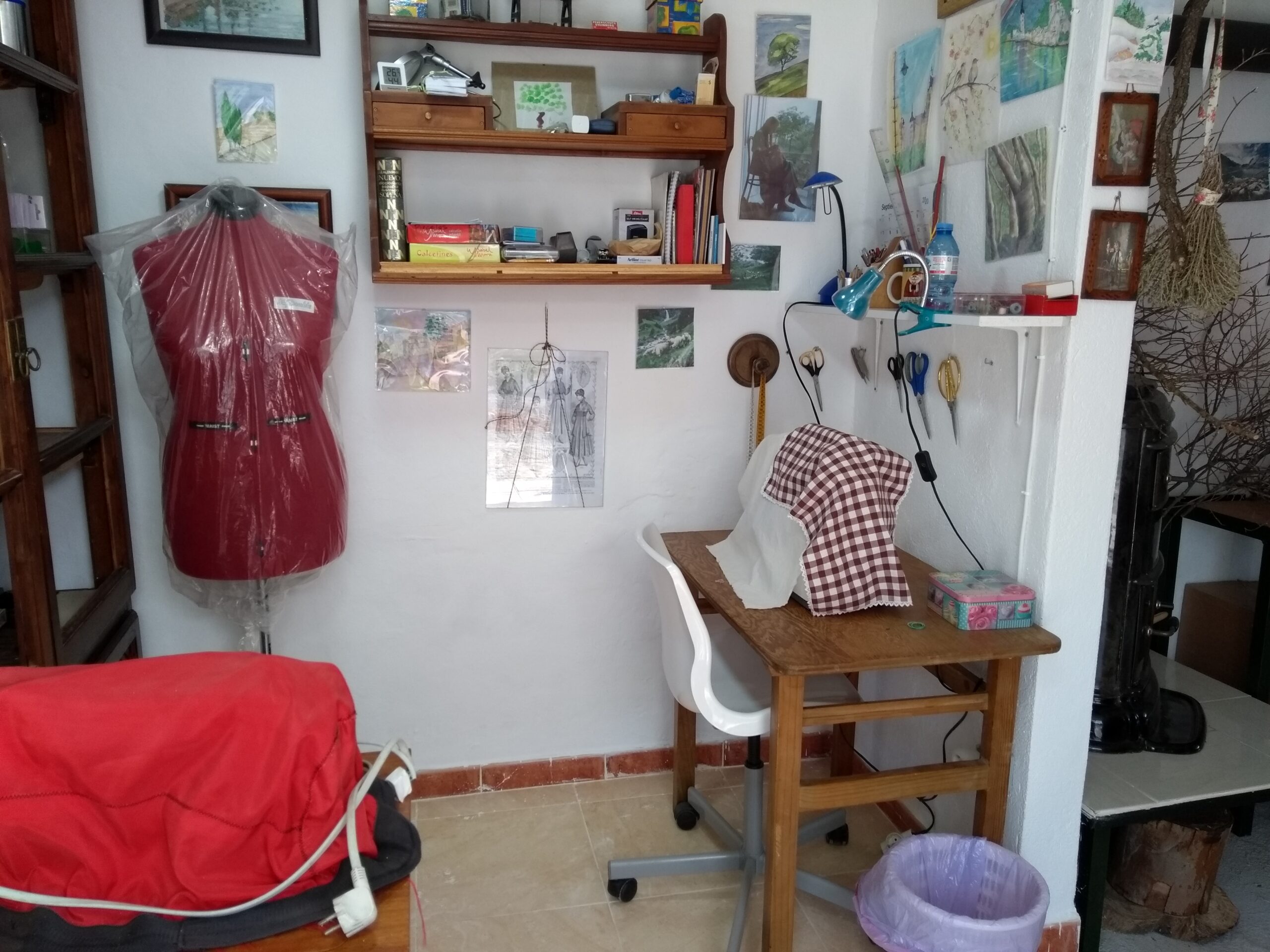
The Workshop has 3 defined spaces:
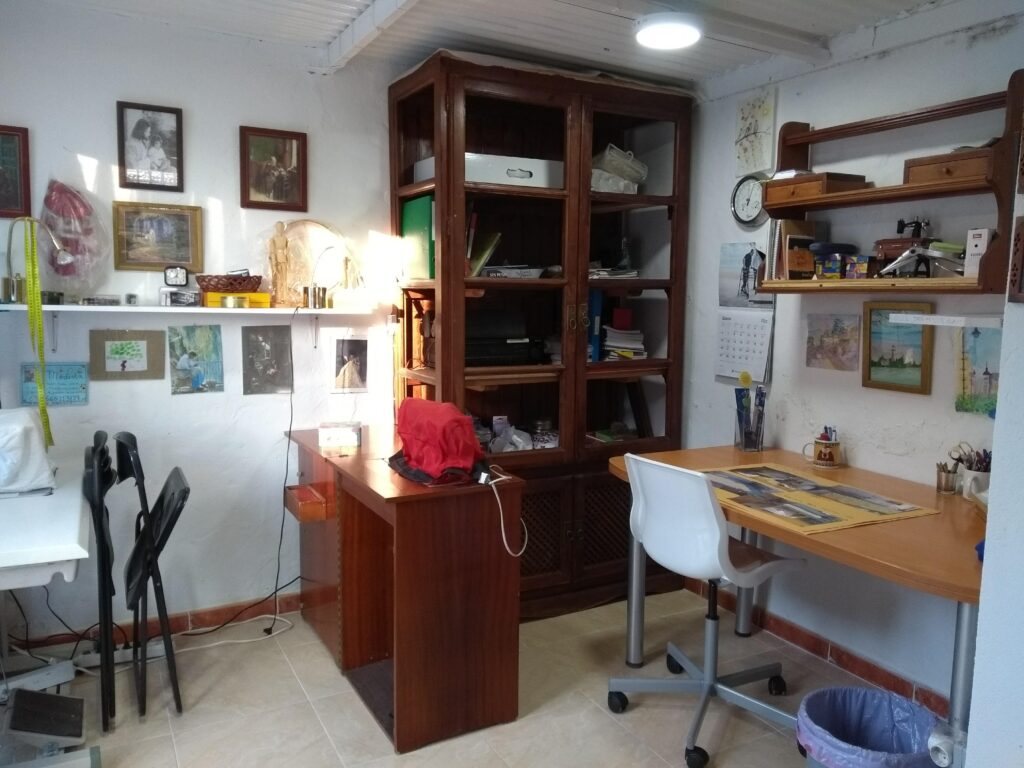
Space I: is the Sewing area, equipped with three sewing machines, a serger and a mannequin, all old but strong. There are all kinds of utensils necessary for the work.
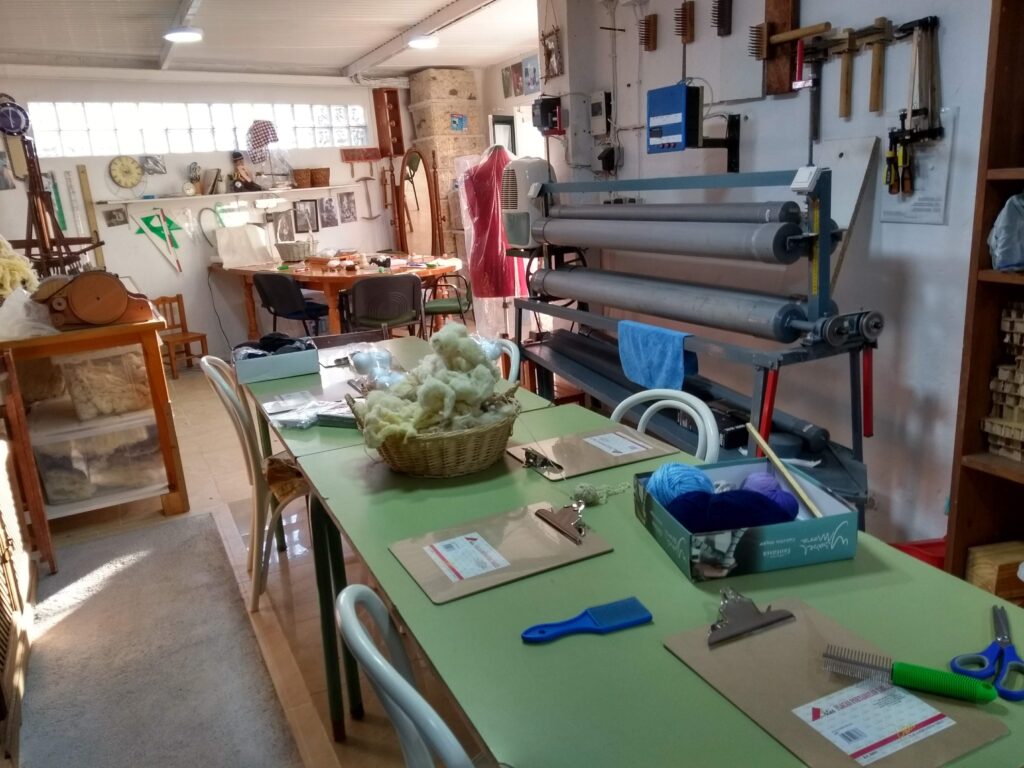
Space II: has three tables to work both sewing and wool, with shelves and wool washing areas, as well as the felting machine. On these shelves there are all kinds of materials, colored yarns, felting needles, templates, combs, catalogs and a long etcetera for working with wool, both wet and dry.
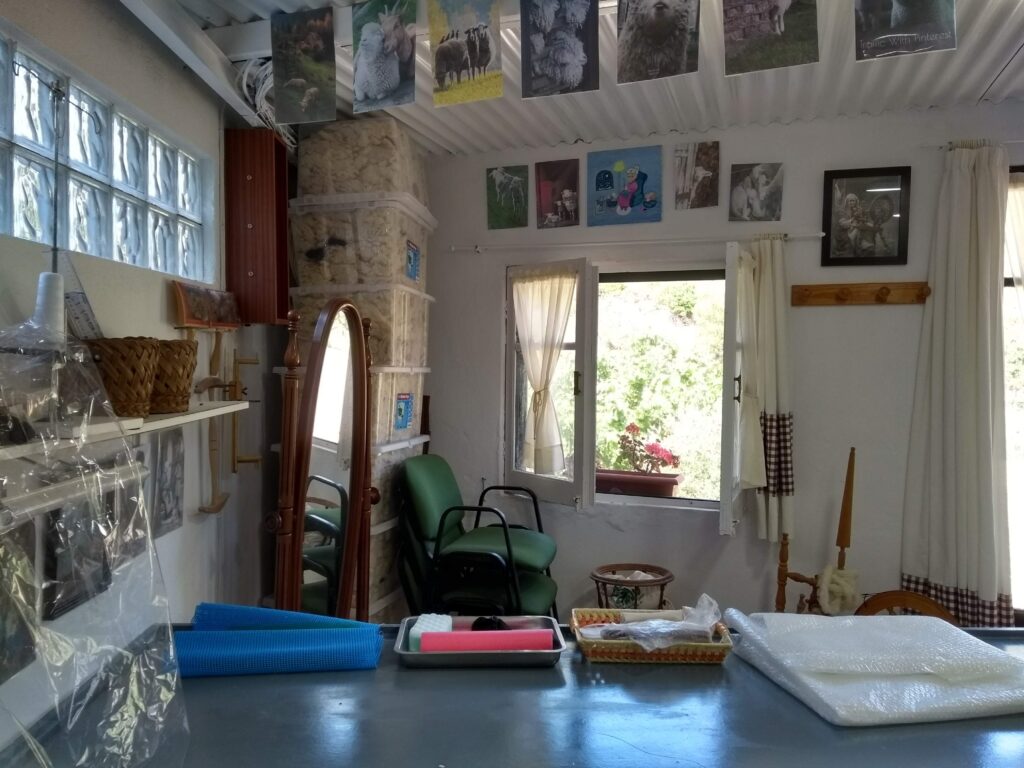
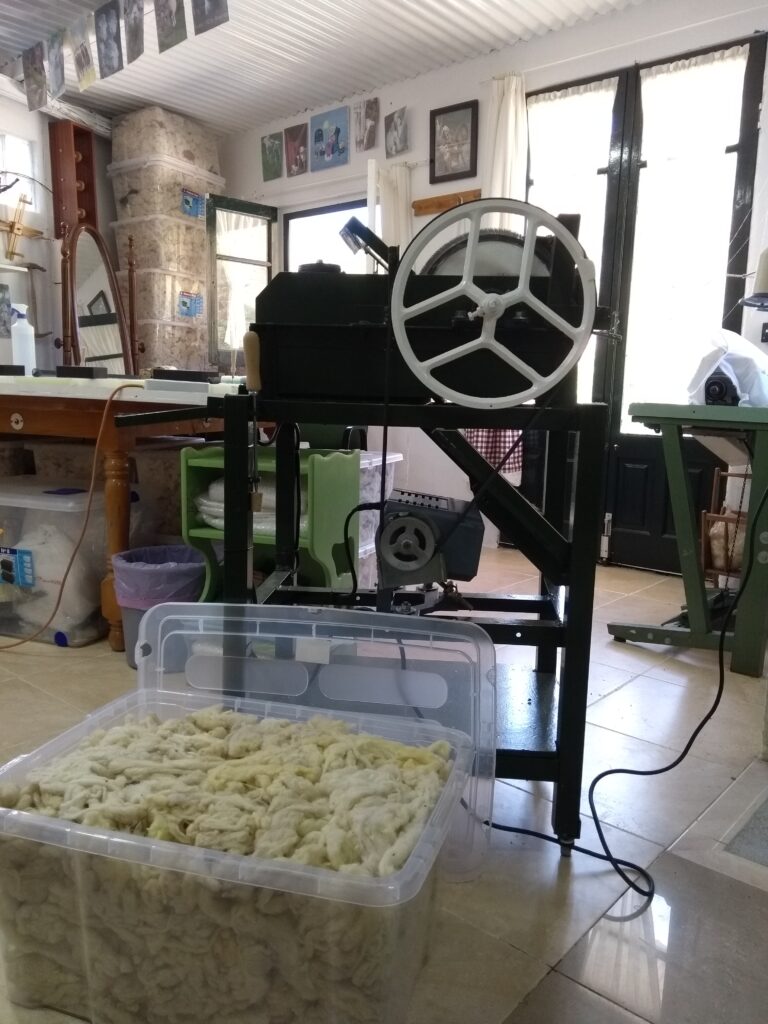
Space III: It has 2 large tables, a wetting table and a work table, It also has a motorized carder and a spinning wheel, as well as all kinds of utensils for processing wool from the time it is washed to its final product.
MACHINERY
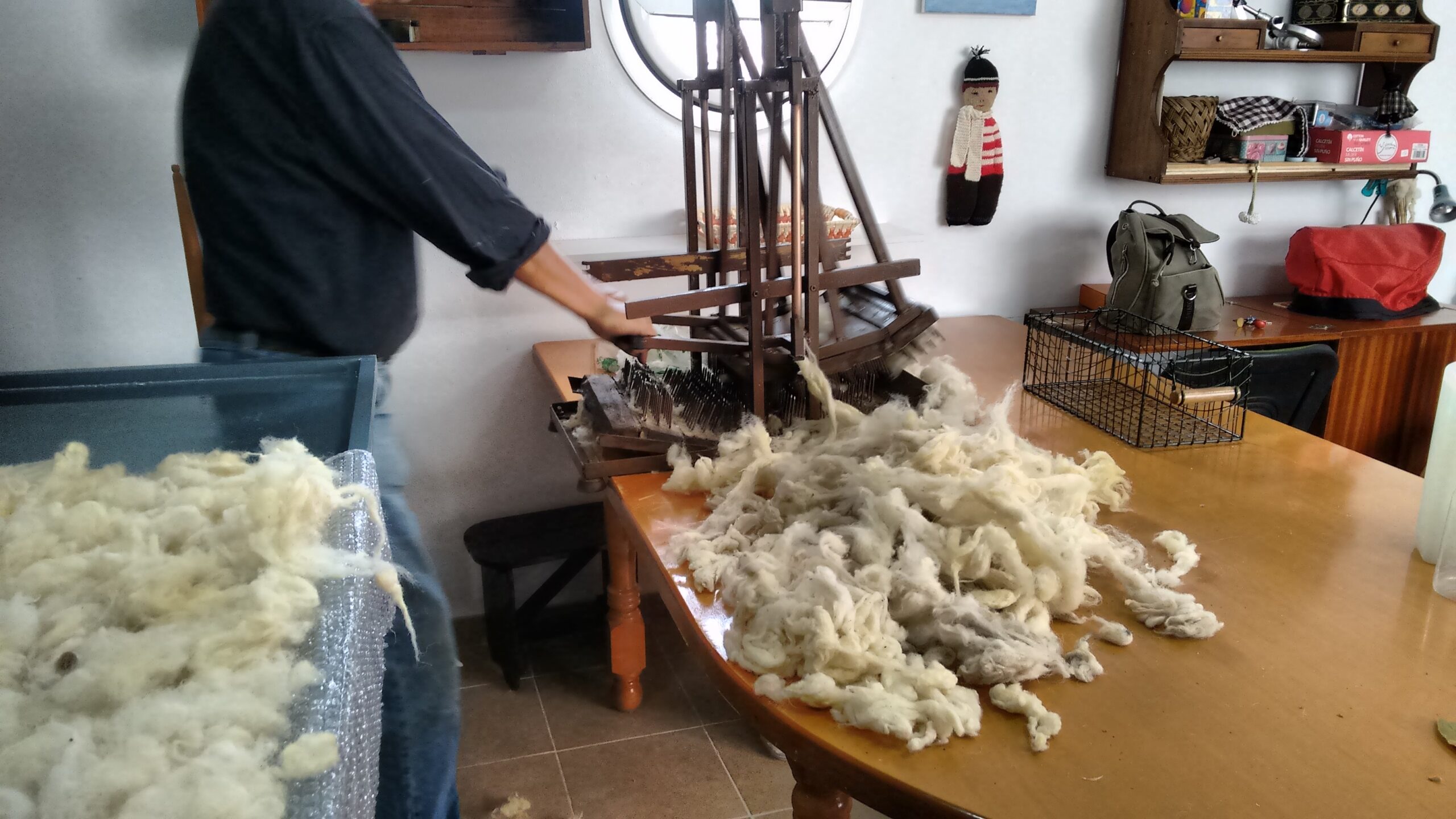
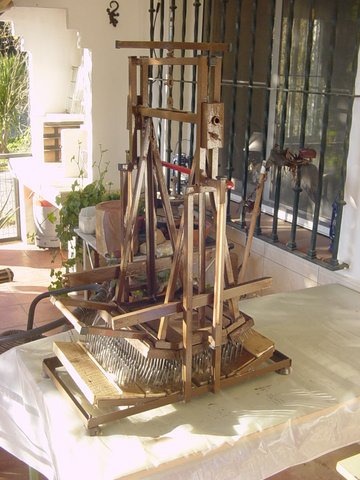
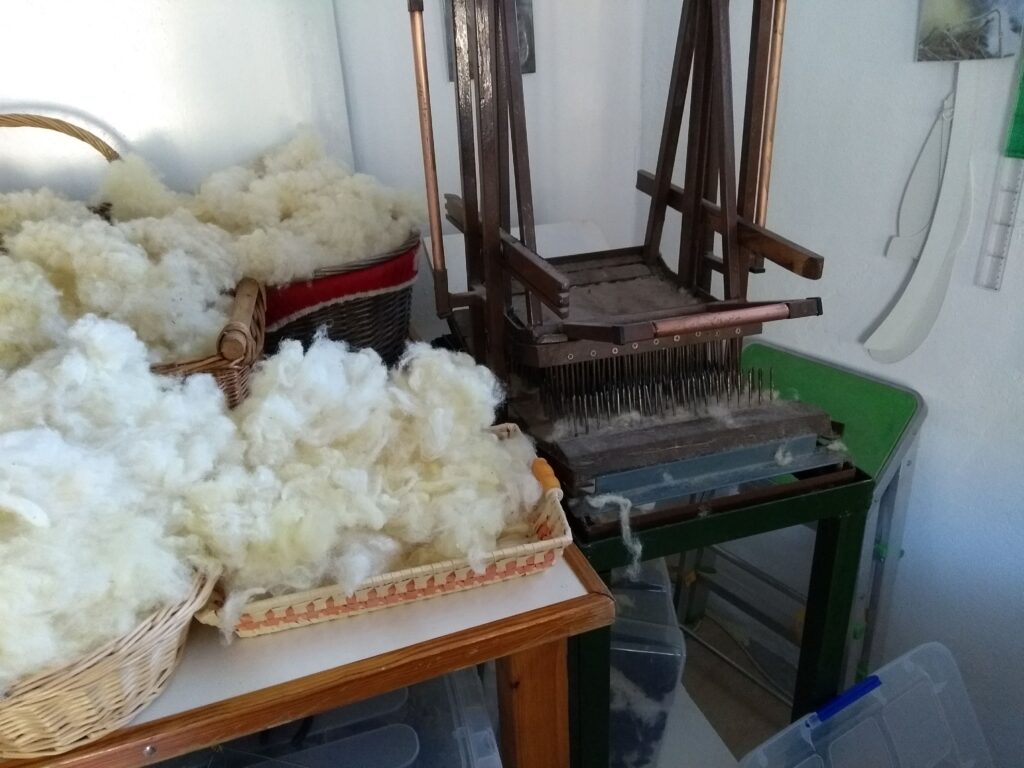
The Scarfer: a machine that in its balancing with special nails opens and separates the wool to clean it of organic remains and leave it ready for the next step in the process.
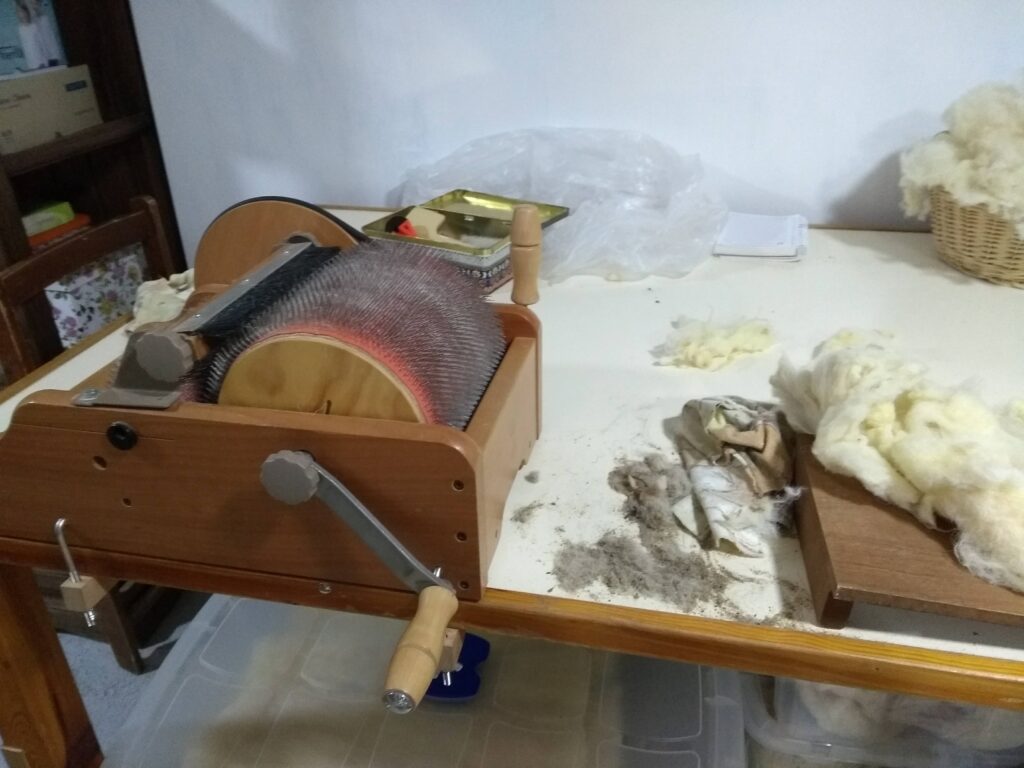
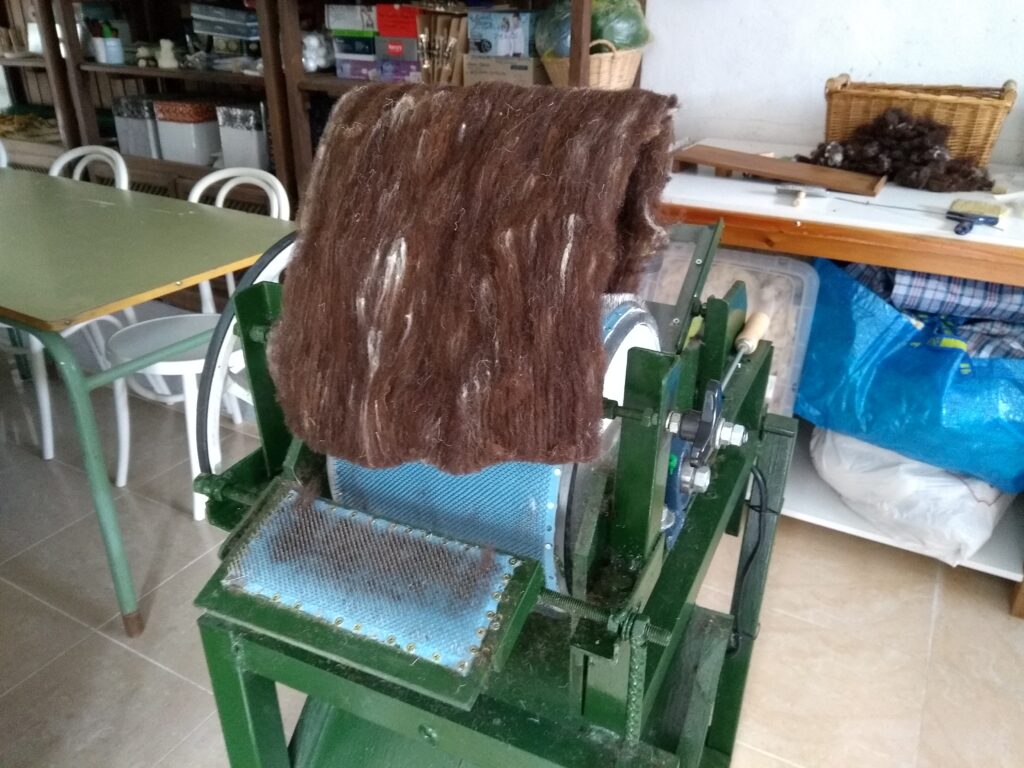
The Carder: combs the wool and untangles it to leave it ready for both dry and wet felting, needle felting by hand or wetting it for the next step in the process.
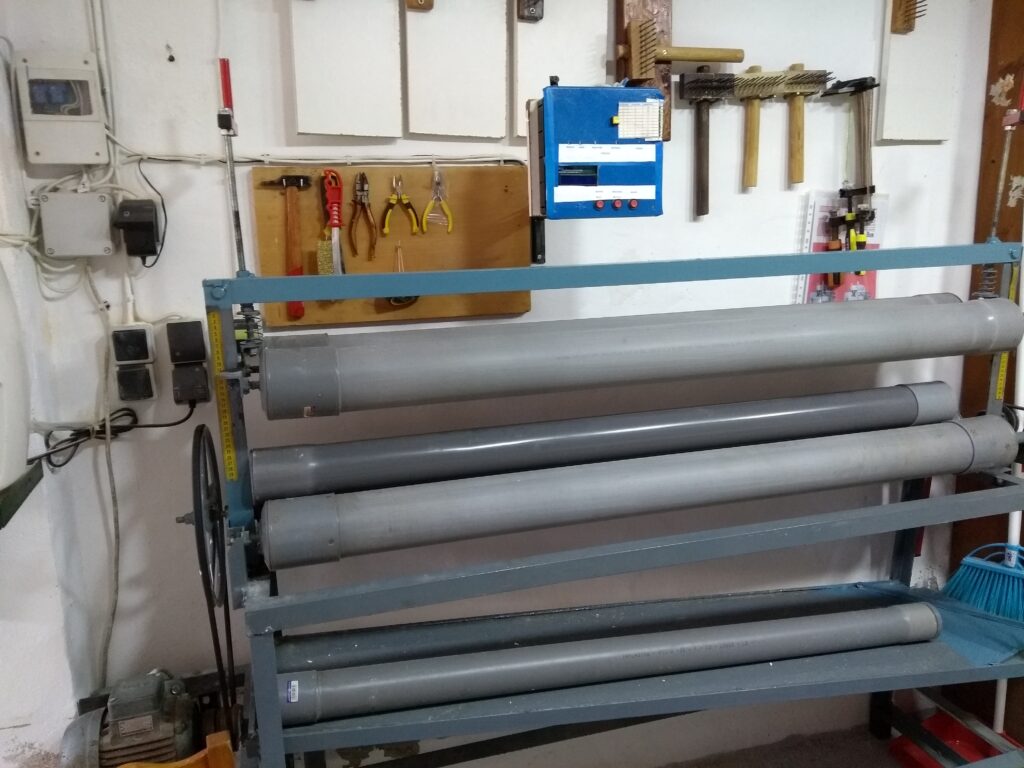
Felting machine: Once the carded and woven wool on the dampening table is introduced into the felting machine. There, by means of repeated rotational movements from one side to the other for a determined time, the wool acquires a very strong and very long lasting weft while keeping its flexibility.